Publicaciones
Esta sección incluye una lista de los últimos artículos científicos del IPNA publicados en revistas incluidas en el Science Citation Index (SCI).
En DIGITAL.CSIC, repositorio institucional del CSIC, pueden encontrar el listado completo de artículos científicos desde 1962, así como otras colecciones de interés como congresos, tesis, libros, material divulgativo, etc. del centro. El objetivo de DIGITAL.CSIC es organizar, preservar y difundir en acceso abierto los resultados de nuestra investigación.
En el repositorio institucional del CSIC, pueden encontrar el listado completo de artículos científicos, así como otras colecciones de interés como congresos, tesis, libros, material divulgativo, etc.
Análisis de la Producción Científica del IPNA 2014-2019: análisis bibliométrico realizado a partir de datos recogidos en Scopus y Web of Science.

Marine cosmetics and the blue bioeconomy: From sourcing to success stories
As the global population continues to grow, so does the demand for longer, healthier lives and environmentally responsible choices. Consumers are increasingly drawn to naturally sourced products with proven health and wellbeing benefits. The marine environment presents a promising yet underexplored resource for the cosmetics industry, offering bioactive compounds with the potential for safe and biocompatible ingredients. This manuscript provides a comprehensive overview of the potential of marine organisms for cosmetics production, highlighting marine-derived compounds and their applications in skin/hair/oral-care products, cosmeceuticals and more. It also lays down critical safety considerations and addresses the methodologies for sourcing marine compounds, including harvesting, the biorefinery concept, use of systems biology for enhanced product development, and the relevant regulatory landscape. The review is enriched by three case studies: design of macroalgal skincare products in Iceland, establishment of a microalgal cosmetics spin-off in Italy, and the utilization of marine proteins for cosmeceutical applications.

Rotter, Ana; Varamogianni-Mamatsi, Despoina; Zvonar Pobirk, Alenka; Gosenca Matjaž, Mirjam; Cueto, Mercedes; Díaz-Marrero, Ana Raquel; Jónsdóttir, Rósa; Sveinsdóttir, Kolbrún; Catalá, Teresa S.; Romano, Giovanna; Aslanbay Guler, Bahar; Atak, Eylem; Berden Zrimec, Maja; Bosch, Daniel; Deniz, Irem; Gaudêncio, Susana P.; Grigalionyte-Bembič, Ernesta; Klun, Katja; Zidar, Luen; Coll Rius, Anna; Baebler, Špela; Lukić Bilela, Lada; Rinkevich, Baruch; Mandalakis, Manolis.
Extreme Saharan dust events expand northward over the Atlantic and Europe, prompting record-breaking PM10 and PM2.5 episodes
Unprecedented extreme Saharan dust (duxt) events have recently expanded northward from subtropical NW Africa to the Atlantic and Europe, with severe impacts on the Canary Islands, mainland Spain and continental Portugal. These six historic duxt episodes occurred on 3–5 and 22–29 February 2020, 15–21 February 2021, 14–17 January 2022, 29 January–1 February 2022, and 14–20 March 2022. We analyzed data of 341 governmental air quality monitoring stations (AQMSs) in Spain (330) and Portugal (11), where PM10 and PM2.5 are measured with European norm (EN) standards, and found that during duxt events PM10 concentrations are underestimated due to technical limitations of some PM10 monitors meaning that they can not properly measure extremely high concentrations. We assessed the consistency of PM10 and PM2.5 data and reconstructed 1690 PM10 (1 h average) data points of 48 and 7 AQMSs in Spain and Portugal, respectively, by using our novel “duxt-r” method. During duxt events, 1 h average PM10 and PM2.5 concentrations were within the range 1000–6000 µg m−3 and 400–1200 µg m−3, respectively. The intense winds leading to massive dust plumes occurred within meteorological dipoles formed by a blocking anticyclone over western Europe and a cutoff low located to the southwest, near the Canary Islands and Cape Verde, or into the Sahara. These cyclones reached this region via two main paths: by deviating southward from the Atlantic mid-latitude westerly circulation or northward from the tropical belt. The analysis of the 2000–2022 PM10 and PM2.5 time series shows that these events have no precedent in this region. The 22–29 February 2020 event led to (24 h average) PM10 and PM2.5 concentrations within the range 600–1840 and 200–404 µg m−3, respectively, being the most intense dust episode ever recorded on the Canary Islands. The 14–20 March 2022 event led to (24 h average) PM10 and PM2.5 values within the range 500–3070 and 100–690 µg m−3 in southeastern Spain, 200–1000 and 60–260 µg m−3 in central Spain, 150–500 and 75–130 µg m−3 in the northern regions of mainland Spain, and within the ranges 200–650 and 30–70 µg m−3 in continental Portugal, respectively, being the most intense dust episode ever recorded in these regions. All duxt events occurred during meteorological anomalies in the Northern Hemisphere characterized by subtropical anticyclones shifting to higher latitudes, anomalous low pressure expanding beyond the tropical belt and amplified mid-latitude Rossby waves. New studies have reported on recent record-breaking PM10 and PM2.5 episodes linked to dipole-induced extreme dust events from North Africa and Asia in a paradoxical context of a multidecadal decrease in dust emissions, a topic that requires further investigation.

Rodríguez, Sergio; López-Darias, Jessica.
On the structure of species-function participation in multilayer ecological networks
Understanding how biotic interactions shape ecosystems and impact their functioning, resilience and biodiversity has been a sustained research priority in ecology. Yet, traditional assessments of ecological complexity typically focus on species-species interactions that mediate a particular function (e.g., pollination), overlooking both the synergistic effect that multiple functions might develop as well as the resulting species-function participation patterns that emerge in ecosystems that harbor multiple ecological functions. Here we propose a mathematical framework that integrates various types of biotic interactions observed between different species. Its application to recently collected data of an islet ecosystem—reporting 1537 interactions between 691 plants, animals and fungi across six different functions (pollination, herbivory, seed dispersal, decomposition, nutrient uptake, and fungal pathogenicity)—unveils a non-random, nested structure in the way plant species participate across different functions. The framework further allows us to identify a ranking of species and functions, where woody shrubs and fungal decomposition emerge as keystone actors whose removal have a larger-than-random effect on secondary extinctions. The dual insight—from species and functional perspectives—offered by the framework opens the door to a richer quantification of ecosystem complexity and to better calibrate the influence of multifunctionality on ecosystem functioning and biodiversity.

Hervías-Parejo, Sandra; Cuevas-Blanco, Mar; Lacasa, Lucas; Traveset, Anna; Donoso, Isabel; Heleno, Rubén; Nogales, Manuel; Rodríguez-Echeverría, Susana; Melián, Carlos J.; Eguíluz, Víctor M.
Novel dinuclear open paddle-wheel-like copper complexes involving π-stacking on the basis of chiral binaphthyl phosphoric acid {(R)-PhosH}: structural, magnetic and optical properties
This research embarked on the study of a new binaphthyl phosphate scaffold of copper. There are two independent neutral complexes in the asymmetric unit: Cu1/Cu2 (I) and Cu3/Cu4 (II) from a similar structure to paddle-wheel-like, with one arm formed by an intra-hydrogen bond between the water molecule bonded to the copper and the phosphine oxide (P[double bond, length as m-dash]O) moieties. Moreover, in the first complex two water and one ketone molecule complete the coordination sphere of the two-copper metals, instead, in the second one, one water and two ketone molecules. The experimental value obtained for the effective paramagnetic moment indicates that there is no appreciable interaction between the copper(II) cations and that they behave as paramagnetic ions over the entire temperature range explored (5–350 K).

Rodríguez, Humberto A.; Cruz, Daniel A.; Lavínb, Víctor; Padrón, Juan I.; Lorenzo-Luis, Pablo.
Los engaños temporales del oso. La producción de una reserva en el Pirineo catalán basada en la restauración de un paisaje
El éxito biológico del programa de reintroducción del oso pardo en los Pirineos, pasando de cinco ejemplares en 1996 a más de setenta en la actualidad, contrasta con la permanencia de un conflicto social con el sector ganadero. Para entender mejor esa conflictividad, este artículo examina cómo la producción de la reserva del oso se basa en un engaño temporal: la restauración de un paisaje pretérito al amparo del discurso de la patrimonialización. Este análisis se desarrolla comparativamente con la producción de la reserva de Baqueira Beret, sustentada en el reemplazo de un pasado ganadero por un presente turístico. Sin embargo, desde el prisma de la historicidad etnográfica, tanto la restauración como el reemplazo se fundamentan en el engaño temporal de diluir los nexos entre pasado, presente y futuro propios de cualquier transformación paisajística.

Pons-Raga, Ferran.
Opposed Aromatic Surfaces Behave as Independent Binding Sites for Carbohydrate Stacking: Analysis of Sandwich-like CH/π/CH Complexes
Díaz-Casado, Laura; Mann, Enrique; Jiménez-Moreno, Ester; Villacampa, Alejandro; Montalvillo-Jiménez, Laura; Sánchez-García, Claudia; Corzana, Francisco; Jiménez-Barbero, Jesús; Gómez, Ana María; Santana, Andrés G.; Asensio, Juan Luis.
Pets and Pests? Framing Human–Cat Moral Ecologies in the Canary Islands, Spain
Felis catus is considered a domestic species, but the individuals belonging to this taxonomic category navigate along the domestic-wild-feral spectrum. This ethnography draws attention to the plethora of adjectives used by three social groups, namely biologists, hunters, and animal-rights campaigners, to examine the ways in which these terms serve to frame cats concerning different moral ecologies in Tenerife (Canary Islands, Spain). The use of these adjectives is always morally charged and pursues specific political agendas regarding how cats should be framed, whether as companion domestic animals to care for or devastating feral predators to kill based on their negative impact in the environment. By teasing out the rationales behind these adjectives, this ethnography reveals how the variables of space and time are key to bringing cats in or pushing them out the human sphere through synchronic or diachronic moral ecologies.

Pons-Raga, Ferrán.
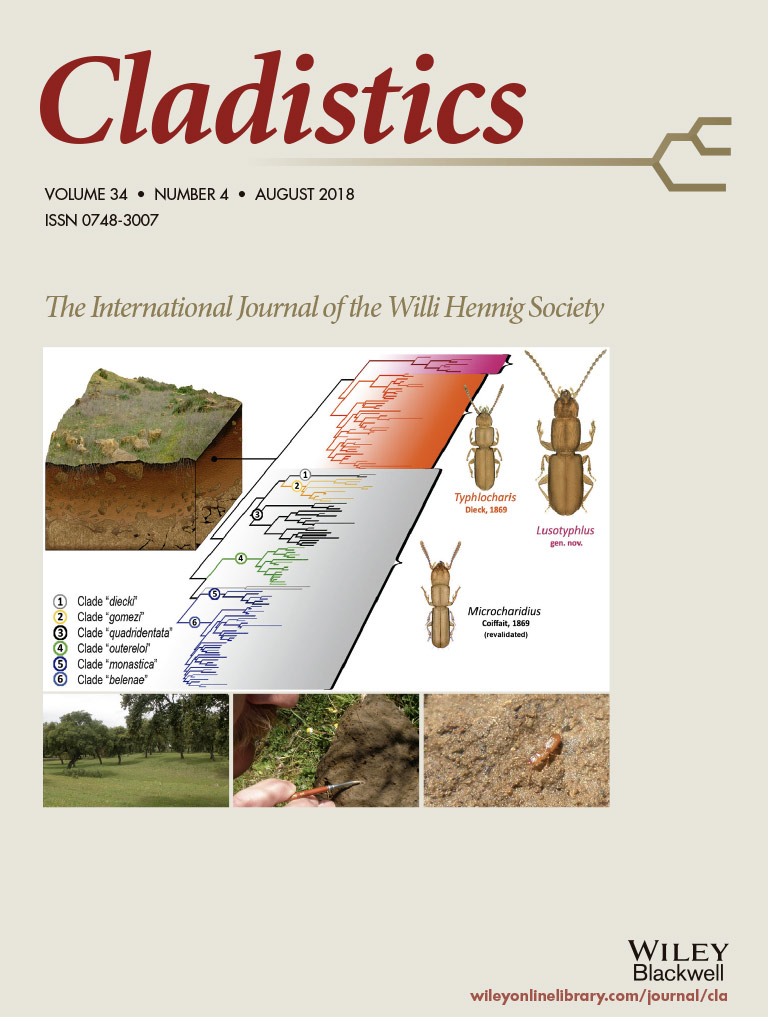
Taxonomy and evolution of the Canarian Issus Fabricius, 1803 (Hemiptera: Fulgoroidea: Issidae) based on morphological and molecular data
The genus Issus Fabricius, 1803 is divided into nine groups of species according to the structure of male genitalia. Phylogenetic position of the Canarian species of the genus is inferred with Bayesian and Maximum Likelihood analyses of four gene markers (COI, H3, CytB, 16S) dataset. Results revealed a well-supported basal dichotomy of the genus into two clades, corresponding to the Mediterranean and the Canarian species. This confirms the monophyly of the Canarian complex of Issus species which is divided into four clades corresponding to I. canariensis, I. rarus, I. bimaculatus, and I. hidipus groups of species. Our results contradict a previously published opinion on the primitiveness of the Canarian species, instead confirming the advanced position of this group. Issus canalaurisi Sergel, 1986 is placed in synonymy under I. cagola Remane, 1985, and I. maderensis Lindberg, 1954 – under I. climacus Fieber, 1876. Issus hidipus Remane 1985 is recorded for the first time from La Gomera and Tenerife Islands, I. padipus Remane 1985 – from El Hierro Island, and I. cagola – from Tenerife Island.

Gnezdilov, Vladimir M.; López, Heriberto; Derbikov, Denis D.; Dzhelali, Polina A.
Landscape Heterogeneity Drives Genetic Diversity in the Highly Dispersive Moss Funaria hygrometrica Hedw.
Funaria hygrometrica, a cosmopolitan moss species known for its remarkable dispersal capacity, was selected as the focal organism to investigate the relationship between landscape features and genetic diversity. Our study encompassed samples collected from two distinct regions: the Spanish Sierra Nevada Mountains (SN), characterized by a diverse landscape with an altitudinal difference of nearly 3500 m within a short distance, and the Murcia Region (MU) in Southeast Spain, characterized by a uniform landscape akin to the lowlands of Sierra Nevada. Genotyping analysis targeted three genetic regions: the nuclear ribosomal internal transcribed spacer (nrITS), the chloroplast rps3-rpl16 region, and the mitochondrial rpl5-rpl16 spacer. Through this analysis, we aimed to assess genetic variability and population structure across these environmentally contrasting regions.The Sierra Nevada populations exhibited significantly higher haplotype diversity (Hd = 0.78 in the highlands and 0.67 overall) and nucleotide diversity (π% = 0.51 for ITS1) compared to the Murcia populations (Hd = 0.35, π% = 0.14). Further investigation unveiled that samples from the lowlands of Sierra Nevada showed a closer genetic affinity to Murcia than to the highlands of Sierra Nevada. Furthermore, the genetic differentiation between highland and lowland populations was significant (ΦST = 0.55), with partial Mantel tests and ResistanceGA analysis revealing a strong correlation between ITS1-based genetic diversity and landscape features, including altitude and bioclimatic variables. Our study elucidated potential explanations for the observed genetic structuring within F. hygrometrica samples’ populations. These included factors such as a high selfing rate within restricted habitats, a limited average dispersal distance of spores, hybrid depression affecting partially incompatible genetic lineages, and recent migration facilitated via human activities into formerly unoccupied areas of the dry zones of Southeast Spain.

Magdy, Mahmoud; Werner, Olaf; Patiño, Jairo; Ros, Rosa María.
Smaller islands, bigger appetites: evolutionary strategies of insular endemic skinks
Competitive dietary and morphological divergence among co-occurring species are fundamental aspects of ecological communities, particularly on islands. Cabo Verde (~570 km west of continental Africa) hosts several endemic reptiles descended from common ancestors, with sympatric species exhibiting wide morphological variation and competing for limited resources. To explore the mechanisms of resource partitioning between coexisting species, DNA metabarcoding was used to compare the diets of large and small skinks, Chioninia vaillantii and Chioninia delalandii, in sympatric and allopatric contexts on Fogo Island and in a more competitive context on the small and resource-poor Cima Islet. The morphological variation of all populations was also examined to test the character displacement hypothesis and to compare the effect of different competitive scenarios. Results showed significant differences in diet and linear measurements between species and populations. The two sympatric populations of C. delalandii on Fogo and Cima showed similar changes in head morphology compared to the allopatric population, supporting character displacement. The effect of higher competitive pressure on Cima was evidenced by the increased morphological and dietary variation observed. This study demonstrates how sister species develop dietary adaptations/morphologies to maintain stable coexistence, especially in highly competitive scenarios, providing useful insights for effective conservation strategies.

Pinho, Catarina J.; Dinis, Herculano A.; Emerson, Brent C.; Vasconcelos, Raquel.