Publicaciones
Esta sección incluye una lista de los últimos artículos científicos del IPNA publicados en revistas incluidas en el Science Citation Index (SCI).
En DIGITAL.CSIC, repositorio institucional del CSIC, pueden encontrar el listado completo de artículos científicos desde 1962, así como otras colecciones de interés como congresos, tesis, libros, material divulgativo, etc. del centro. El objetivo de DIGITAL.CSIC es organizar, preservar y difundir en acceso abierto los resultados de nuestra investigación.
En el repositorio institucional del CSIC, pueden encontrar el listado completo de artículos científicos, así como otras colecciones de interés como congresos, tesis, libros, material divulgativo, etc.
Análisis de la Producción Científica del IPNA 2014-2019: análisis bibliométrico realizado a partir de datos recogidos en Scopus y Web of Science.

Fluorescent tamoxifen derivatives as biophotonic probes for the study of human breast cancer and estrogen-receptor directed photosensitizers
Currently, breast cancer is the most common type of cancer worldwide, being the so-called estrogen receptor (ER) positive the subtype with highest prevalence. For decades, the most successful strategy to prevent recurrence of ER + breast cancers is tamoxifen coadjuvant therapy. However, the involvement of the different estrogen receptors (ERα, ERβ and GPER) and the interaction in their signaling pathways, the evidence for side-effects in chronic tamoxifen treatments, as well as the appearance of tamoxifen-resistant breast cancers, have encouraged the need for novel receptor-targeted fluorescent probes. In line with this, multifunctional antiestrogen conjugates, exhibiting fluorescent properties while retaining the ability to antagonize estrogen actions, have been synthesized and proven to be particularly useful in the study of the molecular biology of ER + breast cancers. These novel fluorescent tamoxifen derivatives (FTDs) exhibit pharmacological features of pure antiestrogens, with similar or even greater affinity for ERα than tamoxifen, inhibit ER-dependent gene transcription and cell proliferation, and are devoid of uterotrophic effects. In the present study we have aim at providing a detailed view of their biophotonic potential, including their spectroscopic properties, their usefulness for fluorescent labelling of cellular compartments and intracellular targets, their application in the identification of non-ER antiestrogen binding sites thought fluorescence competition assays, and finally, in their ability to function as efficient ER-targeted photosensitizers.

Díaz, Mario; Hernández, Dácil; Valdés-Baizabal, Catalina; Lobo, Fernando; Marín, Raquel; Canerina-Amaro, Ana; Boto, Alicia; Lahoz, Fernando.
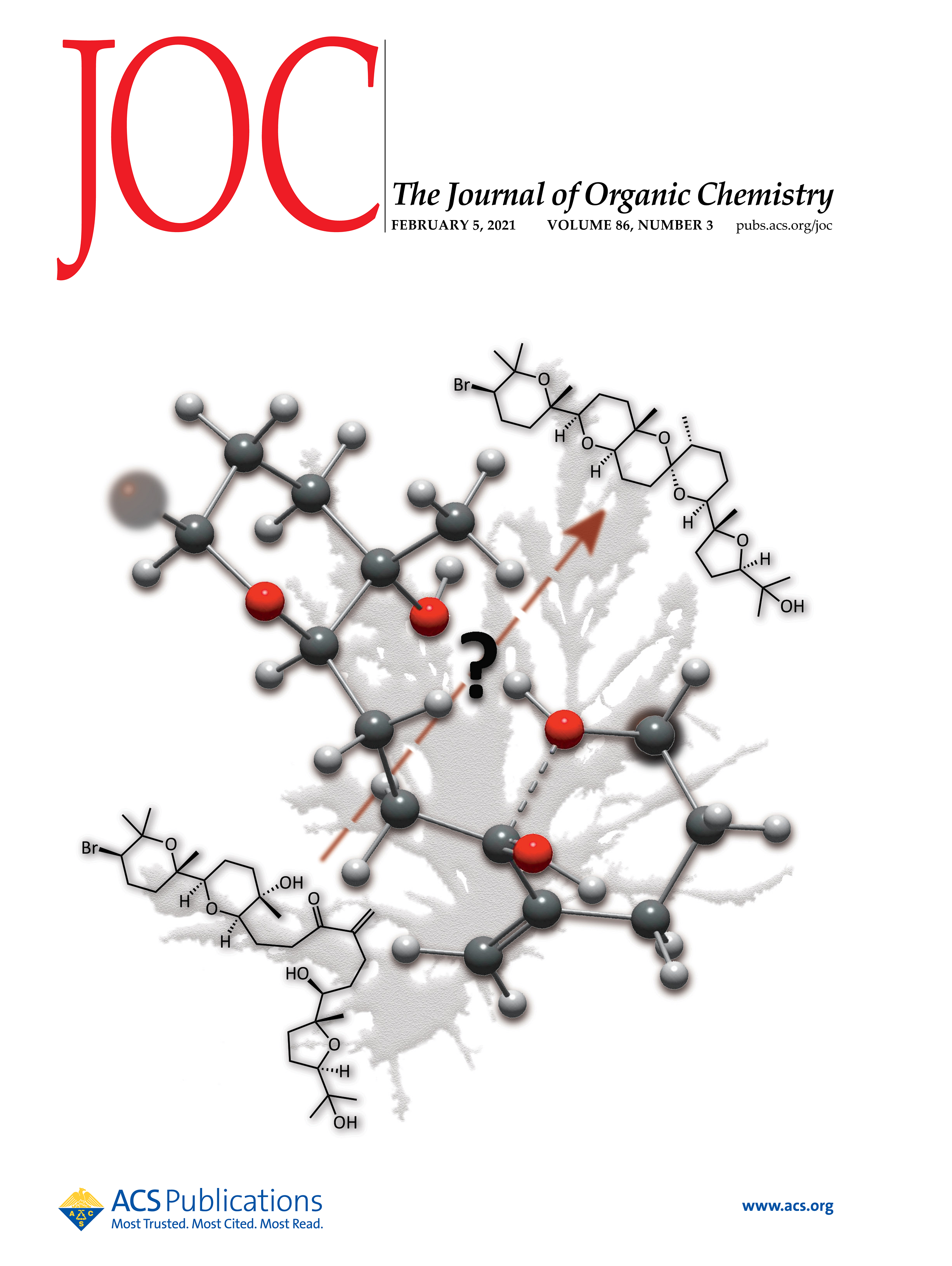
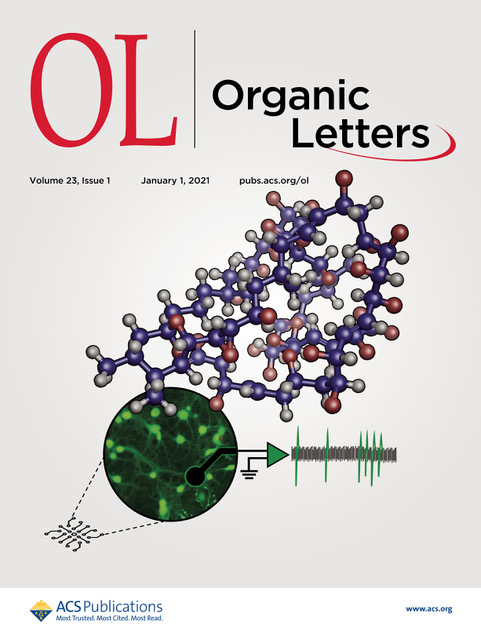
Chamigrane-Type Sesquiterpenes from Laurencia dendroidea as Lead Compounds against Naegleria fowleri
Naegleria fowleri is an opportunistic protozoon that can be found in warm water bodies. It is the causative agent of the primary amoebic meningoencephalitis. Focused on our interest to develop promising lead structures for the development of antiparasitic agents, this study was aimed at identifying new anti-Naegleria marine natural products from a collection of chamigrane-type sesquiterpenes with structural variety in the levels of saturation, halogenation and oxygenation isolated from Laurencia dendroidea. (+)-Elatol (1) was the most active compound against Naegleria fowleri trophozoites with IC50 values of 1.08 μM against the ATCC 30808™ strain and 1.14 μM against the ATCC 30215™ strain. Furthermore, the activity of (+)-elatol (1) against the resistant stage of N. fowleri was also assessed, showing great cysticidal properties with a very similar IC50 value (1.14 µM) to the one obtained for the trophozoite stage. Moreover, at low concentrations (+)-elatol (1) showed no toxic effect towards murine macrophages and could induce the appearance of different cellular events related to the programmed cell death, such as an increase of the plasma membrane permeability, reactive oxygen species overproduction, mitochondrial malfunction or chromatin condensation. Its enantiomer (−)-elatol (2) was shown to be 34-fold less potent with an IC50 of 36.77 μM and 38.03 μM. An analysis of the structure–activity relationship suggests that dehalogenation leads to a significant decrease of activity. The lipophilic character of these compounds is an essential property to cross the blood-brain barrier, therefore they represent interesting chemical scaffolds to develop new drugs.

Arberas-Jiménez, Íñigo; Nocchi, Nathália; Chao-Pellicer, Javier; Sifaoui, Ines; Ribeiro Soares, Angélica; DIAZ MARRERO, ANA RAQUEL ; Fernández, José J.; Piñero, José E.; Lorenzo-Morales, Jacob.
Meroterpenoids from Gongolaria abies-marina against Kinetoplastids: In Vitro Activity and Programmed Cell Death Study
Leishmaniasis and Chagas disease affect millions of people worldwide. The available treatments against these parasitic diseases are limited and display multiple undesired effects. The brown alga belonging to the genus Gongolaria has been previously reported as a source of compounds with different biological activities. In a recent study from our group, Gongolaria abies-marine was proven to present antiamebic activity. Hence, this brown alga could be a promising source of interesting molecules for the development of new antiprotozoal drugs. In this study, four meroterpenoids were isolated and purified from a dichloromethane/ethyl acetate crude extract through a bioguided fractionation process targeting kinetoplastids. Moreover, the in vitro activity and toxicity were evaluated, and the induction of programmed cell death was checked in the most active and less toxic compounds, namely gongolarone B (2), 6Z-1′-methoxyamentadione (3) and 1′-methoxyamentadione (4). These meroterpenoids triggered mitochondrial malfunction, oxidative stress, chromatin condensation and alterations of the tubulin network. Furthermore, a transmission electron microscopy (TEM) image analysis showed that meroterpenoids (2–4) induced the formation of autophagy vacuoles and ER and Golgi complex disorganization. The obtained results demonstrated that the mechanisms of action at the cellular level of these compounds were able to induce autophagy as well as an apoptosis-like process in the treated parasites.

San Nicolás-Hernández, Desirée; Rodríguez-Expósito, Rubén L.; López-Arencibia, Atteneri; Bethencourt-Estrella, Carlos J.; Sifaoui, Ines; Salazar-Villatoro, Lizbeth; Omaña-Molina, Maritza; Fernández, José J.; DIAZ MARRERO, ANA RAQUEL ; Piñero, José E.; Lorenzo-Morales, Jacob.
Editorial: Marine microalgae and biotoxins
Harmful algal blooms (HABs) and their impact in aquaculture, services and aquatic ecosystems in coastal areas are a major concern. The occurrence of these natural phenomena is expected to increase due to the growing pressure of anthropogenic activities, the projected climate trends, and their effects in the marine environment (Kazmi et al., 2022; Zhang et al., 2022). Methodological advances in monitoring systems for a fast and precise detection of biotoxins, together with a better knowledge on oceanographic conditions suitable for development of HABs, contributed to a more efficient and cost-effective management of aquaculture and fishery resources (Ruiz-Villarreal et al., 2022).
DIAZ MARRERO, ANA RAQUEL ; Fernandez, José J.; Rodríguez, Francisco; Band-Schmidt, Christine J.; Diogène, Jorge; Novelli, Antonello.
Comparative analysis of mycotoxin, pesticide, and elemental content of Canarian craft and Spanish mainstream beers
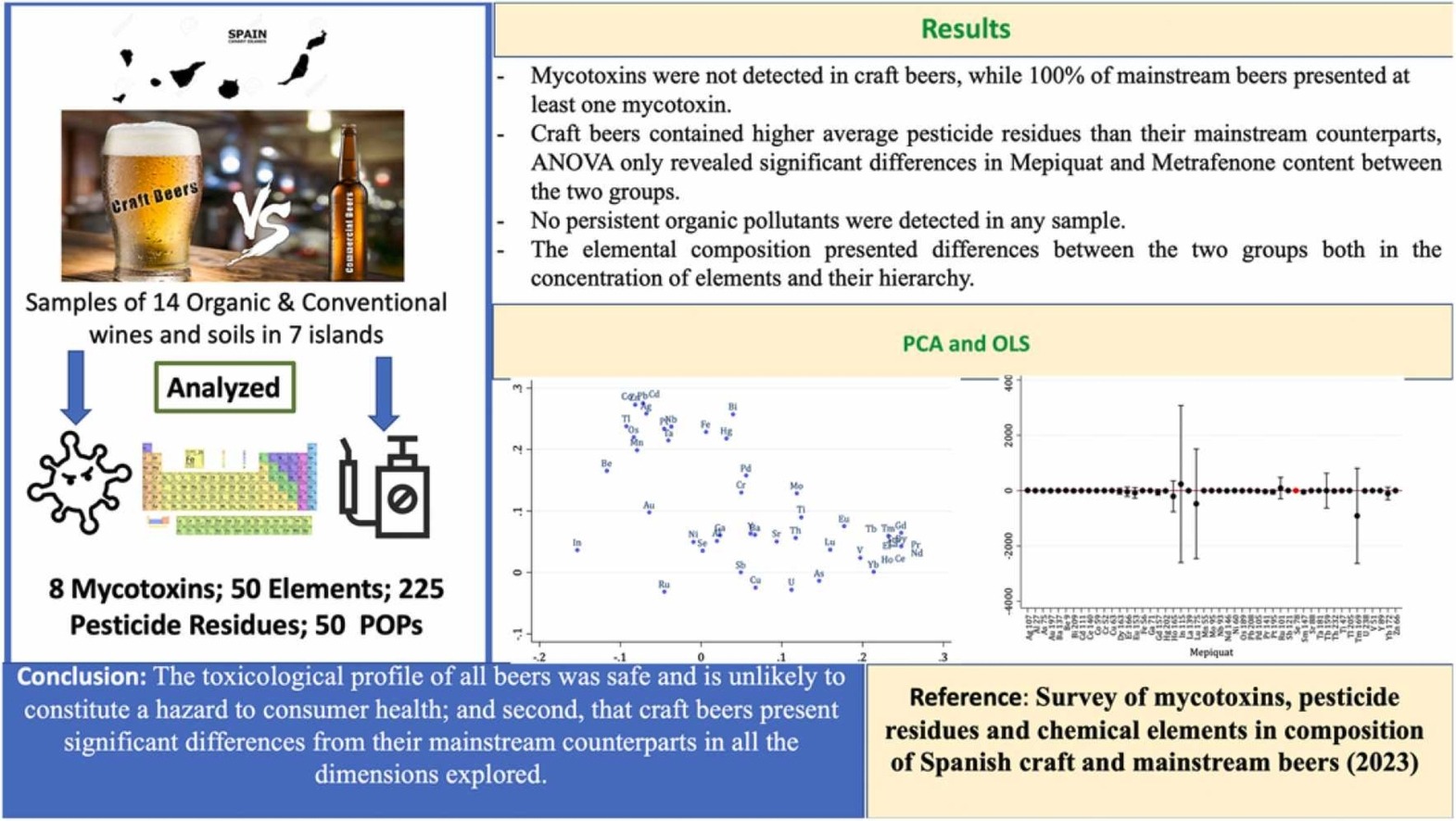
The number of craft breweries and the volume of craft beer produced globally is growing exponentially. However, little is known about their differences with mainstream beers regarding mycotoxin profile, pesticide and pollutant residues and elemental composition. Given that beer is one of the most consumed beverages worldwide, it is important to shed light on its toxicological profile. In this study, samples of 23 craft beers and 19 mainstream Spanish beers were collected to perform a comparative analysis including 8 mycotoxins, 225 pesticide residues and 50 POPs, and 50 elements. Mycotoxins were not detected in craft beers, while 100% of mainstream beers presented at least one mycotoxin. In contrast, craft beers contained higher average pesticide residues than their mainstream counterparts, although significant differences were only found in Mepiquat and Metrafenone content. No persistent organic pollutants were detected in any sample. The elemental composition presented differences between the two groups both in the concentration of elements and their hierarchy. In conclusion, the toxicological profile of all beers was safe and is unlikely to constitute a hazard to consumer health. Craft beers present significant differences from their mainstream counterparts in all the dimensions explored.
Alonso-González, Pablo; Parga-Dans, Eva; de las Heras Tranche, Iván; Acosta-Dacal, Andrea Carolina; Rodríguez Hernández, Ángel; Macías Montes, Ana; Zumbado Peña, Manuel; Pérez Luzardo, Octavio.
Control de la reactividad en plataformas moleculares multifuncionales y su aplicación a la construcción molecular orientada a la diversidad. Éteres propargílicos vinílicos como un caso de estudio
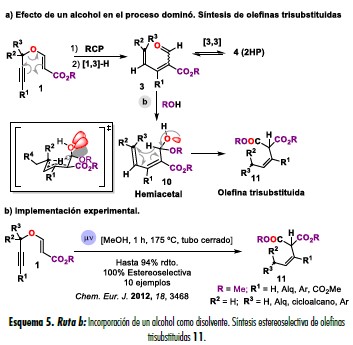
En este tutorial se muestra con el ejemplo de los éteres propargílicos vinílicos, bloques sintéticos multifuncionales, como es posible instrumentalizar la reactividad emergente de la combinación de sus grupos funcionales para el diseño y desarrollo de procesos dominó (cascada) ramificados para la generación de complejidad molecular orientada a la diversidad.
Tejedor, David; García-Tellado, Fernando.
Facilitated Adaptation as A Conservation Tool in the Present Climate Change Context: A Methodological Guide
Climate change poses a novel threat to biodiversity that urgently requires the development of adequate conservation strategies. Living organisms respond to environmental change by migrating to locations where their ecological niche is preserved or by adapting to the new environment. While the first response has been used to develop, discuss and implement the strategy of assisted migration, facilitated adaptation is only beginning to be considered as a potential approach. Here, we present a review of the conceptual framework for facilitated adaptation, integrating advances and methodologies from different disciplines. Briefly, facilitated adaptation involves a population reinforcement that introduces beneficial alleles to enable the evolutionary adaptation of a focal population to pressing environmental conditions. To this purpose, we propose two methodological approaches. The first one (called pre-existing adaptation approach) is based on using pre-adapted genotypes existing in the focal population, in other populations, or even in closely related species. The second approach (called de novo adaptation approach) aims to generate new pre-adapted genotypes from the diversity present in the species through artificial selection. For each approach, we present a stage-by-stage procedure, with some techniques that can be used for its implementation. The associated risks and difficulties of each approach are also discussed.

Torres, Elena; García-Fernández, Alfredo; Iñigo, Diana; Lara-Romero, Carlos; Morente-López, Javier; Prieto-Benítez, Samuel; Rubio Teso, María Luisa; Iriondo, José M.
Introduced rabbits as seed‑dispersing frugivores: a study case on a environmentally diverse oceanic island (Tenerife, Canaries)
Rabbits have travelled with humans to the most remote archipelagos, having been introduced on at least 800 islands worldwide. This herbivore has caused a devastating effect on endemic insular plants, causing changes in species composition, cascading extinctions and disruption of native seed dispersal systems worldwide. However, its ecological impacts as disrupting native seed dispersal systems have not been studied from a holistic perspective in any of the archipelagos where rabbits were introduced. Here, we assess the role of rabbits as frugivores and seed-dispersers on the most extensive and diverse island of the Canary Archipelago, Tenerife, across its five main vegetation zones represented in an altitudinal gradient 0–3715 m a.s.l. To this end, 120 transects per vegetation zone were conducted (August 2020–November 2021) to collect fresh faecal samples from a total of 244 latrines. They consisted of 29,538 droppings in which we found seeds from 73 plant species, 29 of which were identified to species level (13 endemic, eight natives and eight introduced by humans). About 70% of the seeds were identified as fleshy-fruited plant species while the remaining nine were dry fruits. Of the former, only nine showed a percentage of intact seeds greater than 75%, another nine species between 50 and 75%, and three lower than 50%. The digestive effect of rabbits on seedling emergence was generally low, compared to that produced by native seed dispersers. Since fleshy-fruited plants and rabbits have not been linked in their evolutionary history in the Canaries, the former seems to have their own legitimate seed dispersers.

Guerrero-Campos, María; Beatriz Mendes, Sara; Marrero, Patricia; Romero, Javier; Nieves, Concepción; Hervías-Parejo, Sandra; González-Mancebo, Juana María; Nogales, Manuel.
Evolutionary genomics of oceanic island radiations
A recurring feature of oceanic archipelagos is the presence of adaptive radiations that generate endemic, species-rich clades that can offer outstanding insight into the links between ecology and evolution. Recent developments in evolutionary genomics have contributed towards solving long-standing questions at this interface. Using a comprehensive literature search, we identify studies spanning 19 oceanic archipelagos and 110 putative adaptive radiations, but find that most of these radiations have not yet been investigated from an evolutionary genomics perspective. Our review reveals different gaps in knowledge related to the lack of implementation of genomic approaches, as well as undersampled taxonomic and geographic areas. Filling those gaps with the required data will help to deepen our understanding of adaptation, speciation, and other evolutionary processes.

Cerca, José; Cotoras, Darko D.; Bieker, Vanessa C.; De-Kayne, Rishi; Vargas, Pablo; Fernández-Mazuecos, Mario; López-Delgado, Julia; White, Oliver; Stervander, Martin; Geneva, Anthony J.; Guevara Andino, Juan Ernesto; Meier, Joana Isabel; Roeble, Lizzie; Brée, Baptiste; Patiño, Jairo; Guayasamin, Juan M.; Torres, María de Lourdes; Valdebenito, Hugo; Castañeda María del Rosario; Chaves, Jaime A.; Jaramillo Díaz, Patricia; Valente, Luis; Knope, Matthew L.; Price, Jonathan P.; Rieseberg, Loren H.; Baldwin, Bruce G.; Emerson, Brent C.; Rivas-Torres, Gonzalo; Gillespie, Rosemary; Martin, Michael D.
Patterns and drivers of beta diversity across geographic scales and lineages in the Macaronesian flora
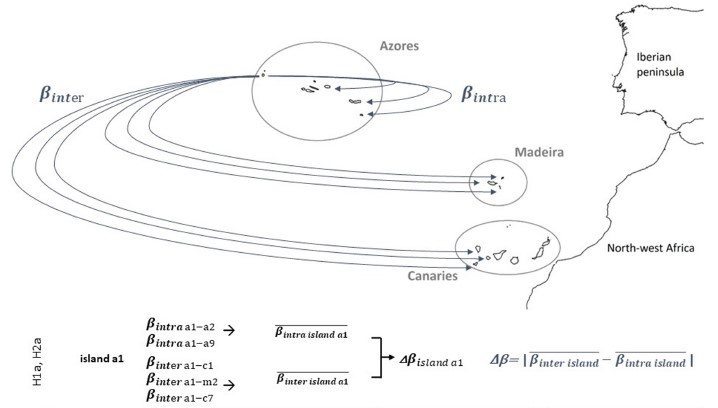
Aim: How spatial, historical and ecological processes drive diversity patterns remains one of the main foci of island biogeography. We determined how beta diversity varies across spatial scales and among organisms, disentangled the drivers of this variation, and examined how, consequently, biogeographic affinities within and among archipelagos vary among land plants.
Mouton, Lea; Patiño, Jairo; Carine, Mark; Rumsey, Fred; Menezes de Sequeira, Miguel; González-Mancebo, Juana María; de Almeida Gabriel, Rosalina Maria; Hardy, Olivier J.; Sim-Sim, Manuela; Reyes-Betancort, J. Alfredo; Collart, Flavien; Vanderpoorten, Alain.