Publications
This section includes a list of the latest IPNA scientific articles published in journals included in the Science Citation Index (SCI).
In DIGITAL.CSIC, institutional repository of the CSIC, you can find the complete list of scientific articles since 1962, as well as other collections of interest such as congresses, theses, books, informative material, etc. of the centre. The aim of DIGITAL.CSIC is to organize, preserve and disseminate in open access the results of our research.
In the institutional repository of the CSIC, you can find the complete list of scientific articles, as well as other collections of interest such as congresses, theses, books, informative material, etc.
Analysis of the IPNA 2014-2019 Scientific Production: bibliometric analysis from data collected in Scopus and Web of Science.

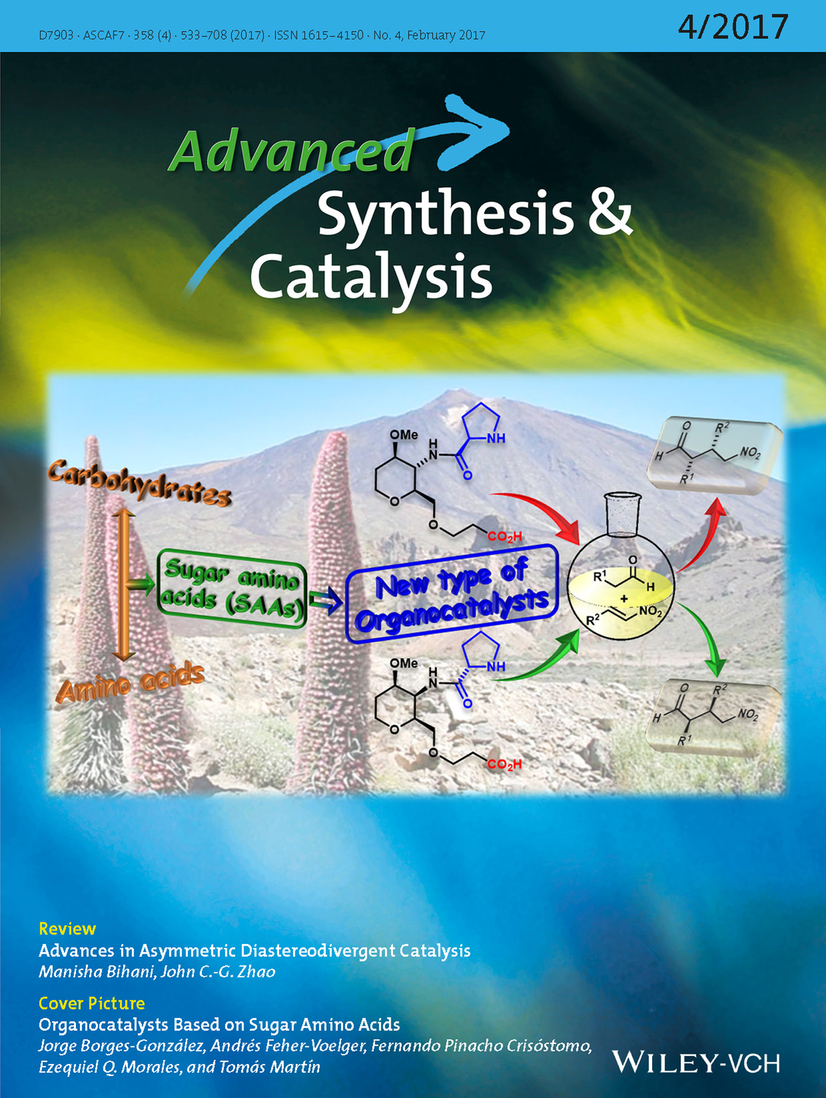
Efficient synthesis of benzocyclotrimer analogues by Negishi cross-coupling and intramolecular nucleophilic substitution
We report a new and efficient synthetic strategy that allows access to flexible and functionalized benzocyclotrimers under mild conditions and in few steps. The Negishi cross-coupling reaction was used for the C-C bond formation, whereas intramolecular O-alkylations provided the oxepane rings.

Borges-González, Jorge; Martín, Tomás
Biocidal effects of Piper hispidinervum (Piperaceae) essential oil and synergism among its main components
In this study we evaluated the effect of a pressure gradient (1–2 atm) in the extraction and composition of the essential oil (EO) of Piper hispidinervum by steam distillation. We also evaluated the insect antifeedant effects (Spodoptera littoralis, Leptinotarsa decemlineata, Myzus persicae and Rhopalosiphum padi) and nematicidal activity (Meloidogyne javanica) of the oils, their major components and their synergistic interactions. Safrole was the major component (78–81%) followed by terpinolene (5–9%). The EOs tested were effective insect antifeedants. Safrole, explained most of the insect antifeedant action of P. hispidinervum EOs. When safrole and terpinolene were tested in binary combinations, low ratios of safrole improved the antifeedant effects of terpinolene. P. hispidinervum EOs caused higher mortality of M. javanica juveniles than their major components. In binary combinations, low ratios of terpinolene increased the nematicidal effects of safrole. The EO treatment strongly suppressed nematode egg hatching and juvenile infectivity. P. hispidinervum EOs affected the germination of S. lycopersicum and L. sativa mostly at 24 h of treatment, being L. sativa the most sensitive. Safrole moderately affected germination and root growth of L. sativa, S. lycopersicum and L. perenne. Terpinolene only affected S. lycopersicum root growth.

Andrés, Mª Fé; Rossa, G. E.; Cassel, E.; Vargas, R. M. F.; Santana, O.; Díaz, Carmen E.; González-Coloma, Azucena
Leptolide Improves Insulin Resistance in Diet-Induced Obese Mice
Type 2 diabetes (T2DM) is a complex disease linked to pancreatic beta-cell failure and insulin resistance. Current antidiabetic treatment regimens for T2DM include insulin sensitizers and insulin secretagogues. We have previously demonstrated that leptolide, a member of the furanocembranolides family, promotes pancreatic beta-cell proliferation in mice. Considering the beneficial effects of leptolide in diabetic mice, in this study, we aimed to address the capability of leptolide to improve insulin resistance associated with the pathology of obesity. To this end, we tested the hypothesis that leptolide should protect against fatty acid-induced insulin resistance in hepatocytes. In a time-dependent manner, leptolide (0.1 µM) augmented insulin-stimulated phosphorylation of protein kinase B (PKB) by two-fold above vehicle-treated HepG2 cells. In addition, leptolide (0.1 µM) counteracted palmitate-induced insulin resistance by augmenting by four-fold insulin-stimulated phosphorylation of PKB in HepG2 cells. In vivo, acute intraperitoneal administration of leptolide (0.1 mg/kg and 1 mg/kg) improved glucose tolerance and insulin sensitivity in lean mice. Likewise, prolonged leptolide treatment (0.1 mg/kg) in diet-induced obese mice improved insulin sensitivity. These effects were paralleled with an ~50% increased of insulin-stimulated phosphorylation of PKB in liver and skeletal muscle and reduced circulating pro-inflammatory cytokines in obese mice. We concluded that leptolide significantly improves insulin sensitivity in vitro and in obese mice, suggesting that leptolide may be another potential treatment for T2DM

Villa-Pérez, Pablo; Cueto, Mercedes; Díaz-Marrero, Ana R; Lobatón, Carmen D.; Moreno, Alfredo; Perdomo, Germán; Cózar-Castellano, Irene
Endophytic fungi as novel sources of biopesticides: the Macaronesian Laurel forest, a case study
Endophytes fungi have been widely bioprospected to find new drugs and drug leads including antimicrobial agents and antifungals. However, an important role in host plant protection has been suggested for their presence and their metabolites. Therefore, nematicidal and insecticidal effects of their metabolites should be expected. In this review, the literature data available on insecicidal and nematicidal compounds identified from fungal endophytes are presented. Additionally we present a recent study on the endophytic biodiversity of a unique paleoflora, the Macaronesian laurel forest, in the light of their role in plant protection.

Andrés, Mª Fé; Díaz, Carmen E.; Giménez, Cristina; Cabrera, Raimundo; González-Coloma, Azucena.
Direct Access to 2,3,4,6-Tetrasubstituted Tetrahydro-2H-pyrans via Tandem SN2′–Prins Cyclization
A new, direct, and diastereoselective synthesis of activated 2,3,4,6-tetrasubstituted tetrahydro-2H-pyrans is described. In this reaction, iron(III) catalyzed an SN2′–Prins cyclization tandem process leading to the creation of three new stereocenters in one single step. These activated tetrahydro-2H-pyran units are easily derivatizable through CuAAC conjugations in order to generate multifunctionalized complex molecules. DFT calculations support the in situ SN2′ reaction as a preliminary step in the Prins cyclization.

Scoccia, Jimena; Pérez, Sixto J.; Sinka, Victoria; Cruz, Daniel A.; López-Soria, Juan M.; Fernández, Israel; Martín, Víctor S.; Miranda, Pedro O. ; Padrón, Juan I.
Contribution by vertebrates to seed dispersal effectiveness in the Galápagos Islands: a community-wide approach
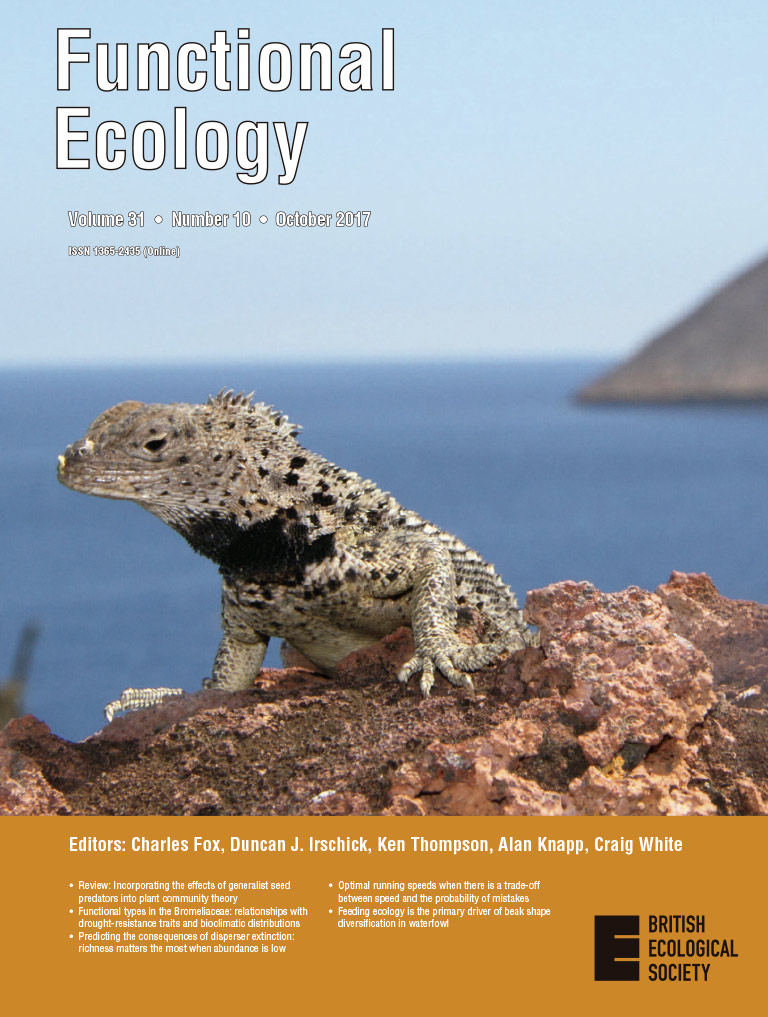
Seed dispersal and seedling recruitment are crucial phases in the life cycle of all spermatophyte plants. The net contribution of seed dispersers to plant establishment is known as seed dispersal effectiveness (SDE) and is defined as the product of a quantitative (number of seeds dispersed) and a qualitative (probability of recruitment) component. In Galápagos, we studied the direct contribution to SDE (number of seeds dispersed and effect on seedling emergence) provided by the five island groups of frugivores (giant tortoises, lizards, medium-sized passerine birds, small non-finch passerine birds, and finches) in the two main habitats in this archipelago: the lowland and the highland zones, and found 16 vertebrate species dispersing 58 plant species. Data on frequency of occurrence of seeds in droppings and number of seeds dispersed per unit area produced contrasting patterns of seed dispersal. Based on the former, giant tortoises and medium-sized passerines were the most important seed dispersers. However, based on the latter, small non-finch passerines were the most important dispersers, followed by finches and medium-sized passerines. The effect of disperser gut passage on seedling emergence varied greatly depending on both the disperser and the plant species. Although the contribution to SDE provided by different disperser guilds changed across plant species, medium-sized passerines (e.g., mockingbirds) provided a higher contribution to SDE than lava lizards in 10 out of 16 plant species analysed, whereas lava lizards provided a higher contribution to SDE than birds in five plant species. While both the quantitative and qualitative components addressed are important, our data suggests that the former is a better predictor of SDE in the Galápagos archipelago.

Nogales, Manuel; González-Castro, Aarón; Rumeu, Beatriz ; Traveset, Anna; Vargas, Pablo ; Jaramillo, Patricia; Olesen, J.M.; Heleno, R.H.
Integrative Pericyclic Cascade: An Atom Economic, Multi C−C Bond‐Forming Strategy for the Construction of Molecular Complexity
An all‐pericyclic manifold is developed for the construction of topologically diverse, structurally complex and natural product‐like polycyclic chemotypes. The manifold uses readily accessible tertiary propargyl vinyl ethers as substrates and imidazole as a catalyst to form up to two new rings, three new C−C bonds, six stereogenic centers and one transannular oxo‐bridge. The manifold is efficient, scalable and instrumentally simple to perform and entails a propargyl Claisen rearrangement–[1,3]H shift, an oxa‐6π‐electrocyclization, and an intramolecular Diels–Alder reaction.

Tejedor, David; Delgado-Hernández, Samuel; Peyrac, Jesús; González-Platas, Javier; García-Tellado, Fernando
Diterpenes with new isoryanodane derived skeletons from Persea indica
A phytochemical study of the aerial parts of Persea indica has permitted the isolation of two diterpenes with novel skeletons derived from isoryanodane, which have named perseaindicol and secoperseanol. A third compound, also with a new carbon framework, proved to be identical with cinncassiol E, whose structure has been now corrected.

Fraga, Braulio M.; Terrero, David; Bolaños González, Patricia; Díaz, Carmen E.
Efficient synthesis of benzocyclotrimer analogues by Negishi cross-coupling and intramolecular nucleophilic substitution
We report a new and efficient synthetic strategy that allows access to flexible and functionalized benzocyclotrimers under mild conditions and in few steps. The Negishi cross-coupling reaction was used for the C-C bond formation, whereas intramolecular O-alkylations provided the oxepane rings.

Borges-González, Jorge; Martín, Tomás
Evidence for mega-landslides as drivers of island colonization
[Aim] How non-dispersive taxa colonize islands is generalized as being by wind, or rafting, with the implicit assumption that such events involve one (wind) or a few (rafting) individuals. However, because of the evolutionary time-scale for colonization events, the fit of individual species to a conceptual model of wind or rafting is difficult to assess. Here, we describe an alternative testable geological model for inter-island colonization that can result in larger effective founding population sizes than traditionally accepted colonization mechanisms. We then test for the fit of genetic data to this model using weevils from the Laparocerus tessellatus species complex. [Location] Canary Islands. Methods: Using a combination of geological data for the Canary Islands, and mtDNA data from a weevil radiation within the Canary Islands, we test three species-level predictions for mega-landslides as drivers of oceanic rafting between islands and subsequent speciation: (1) colonization should involve multiple female lineages, (2) founding lineages should have a common geographical origin, consistent with a mega-landslide event, and (3) colonization direction should be consistent with ocean currents. [Results] Both individual-level and population-level analyses support a mega-landslide event as the driver of colonization from the island of Tenerife to La Palma. At least four female lineages colonized La Palma from Tenerife, with the geographical range of ancestral sequences to these four lineages describing the limits of the La Orotava mega-landslide in Tenerife. [Main conclusions] In the context of island biogeographical theory, mega-landslides may be an important driver of colonization, and subsequent lineage diversification. They provide a framework for hypothesis testing using genetic data from species, or closely related species, with ranges that encompass landslides and potential areas of colonization.

García-Olivares, Víctor; López, Heriberto; Patiño, Jairo; Álvarez, Nadir; Machado, Antonio; Carracedo, Juan Carlos; Soler, Vicente; Emerson, Brent C.