Publications
This section includes a list of the latest IPNA scientific articles published in journals included in the Science Citation Index (SCI).
In DIGITAL.CSIC, institutional repository of the CSIC, you can find the complete list of scientific articles since 1962, as well as other collections of interest such as congresses, theses, books, informative material, etc. of the centre. The aim of DIGITAL.CSIC is to organize, preserve and disseminate in open access the results of our research.
In the institutional repository of the CSIC, you can find the complete list of scientific articles, as well as other collections of interest such as congresses, theses, books, informative material, etc.
Analysis of the IPNA 2014-2019 Scientific Production: bibliometric analysis from data collected in Scopus and Web of Science.

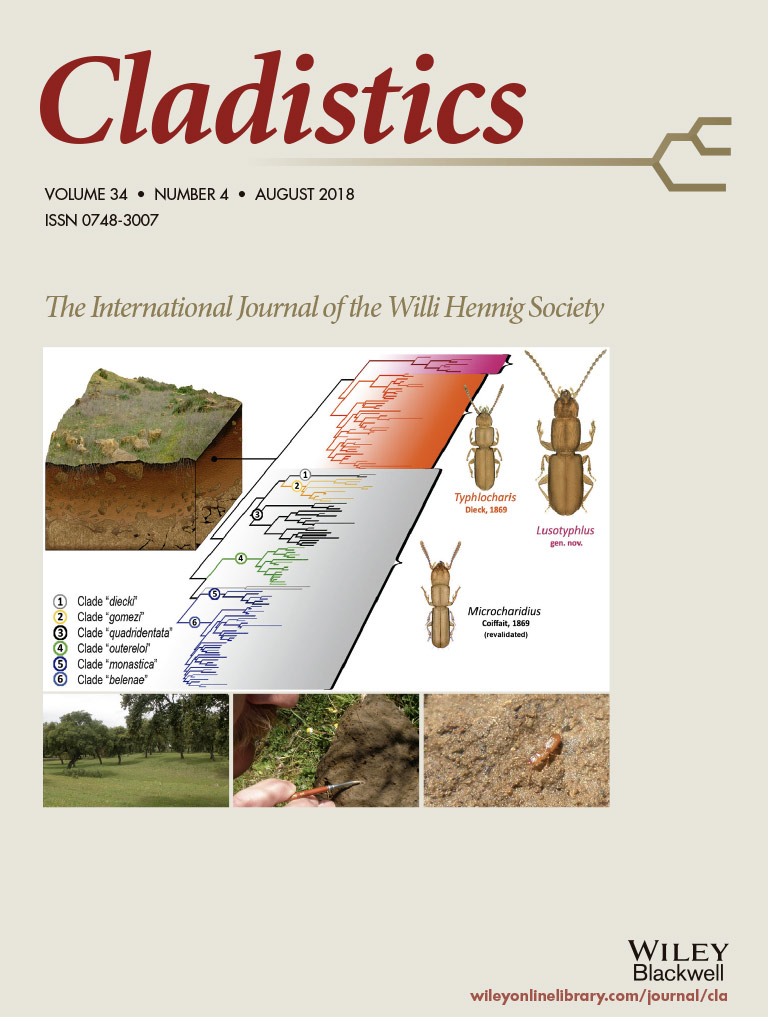
Dispersal ability and its consequences for population genetic differentiation and diversification
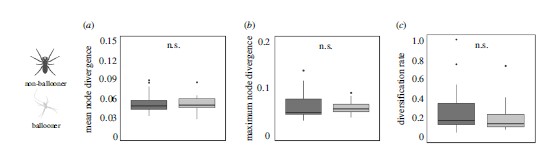
Dispersal ability is known to influence geographical structuring of genetic variation within species, with a direct relationship between low vagility and population genetic structure, which can potentially give rise to allopatric speciation. However, our general understanding of the relationship between dispersal ability, population differentiation and lineage diversification is limited. To address this issue, we sampled mitochondrial DNA variation within lineages of beetles and spiders across the Canary Islands to explore the relationships between dispersal ability, differentiation within lineages and diversification. We found positive relationships between population genetic structure and diversification for both beetles and spiders. Comparisons between dispersive and non-dispersive lineages revealed significant differences for both lineage differentiation and diversification. For both taxa, non-dispersive lineages had stronger population genetic structure. Genus-level endemic species richness and proxies for diversification rate within genera were higher in non-dispersive taxa for both beetles and spiders. Comparisons of average and maximum node divergences within genera suggest that species turnover may be higher in non-dispersive genera. Our results reveal a model where dispersal limitation may shape the diversity of lineages across evolutionary timescales by positively influencing intraspecific and species diversity, moderated by higher extinction rates compared to more dispersive lineages.
Suárez, Daniel; Arribas, Paula; Jiménez-García, Eduardo; Emerson, Brent C.
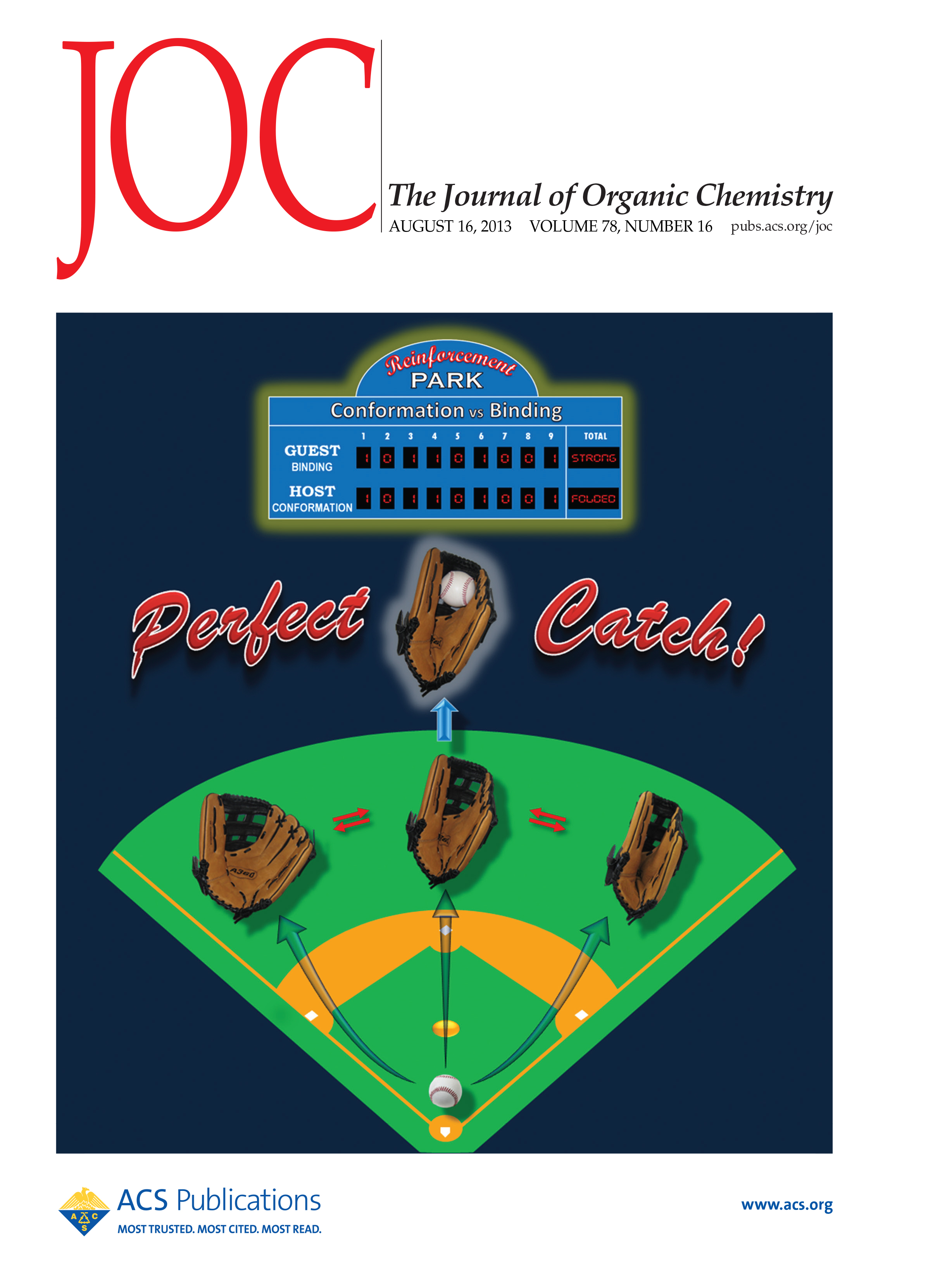
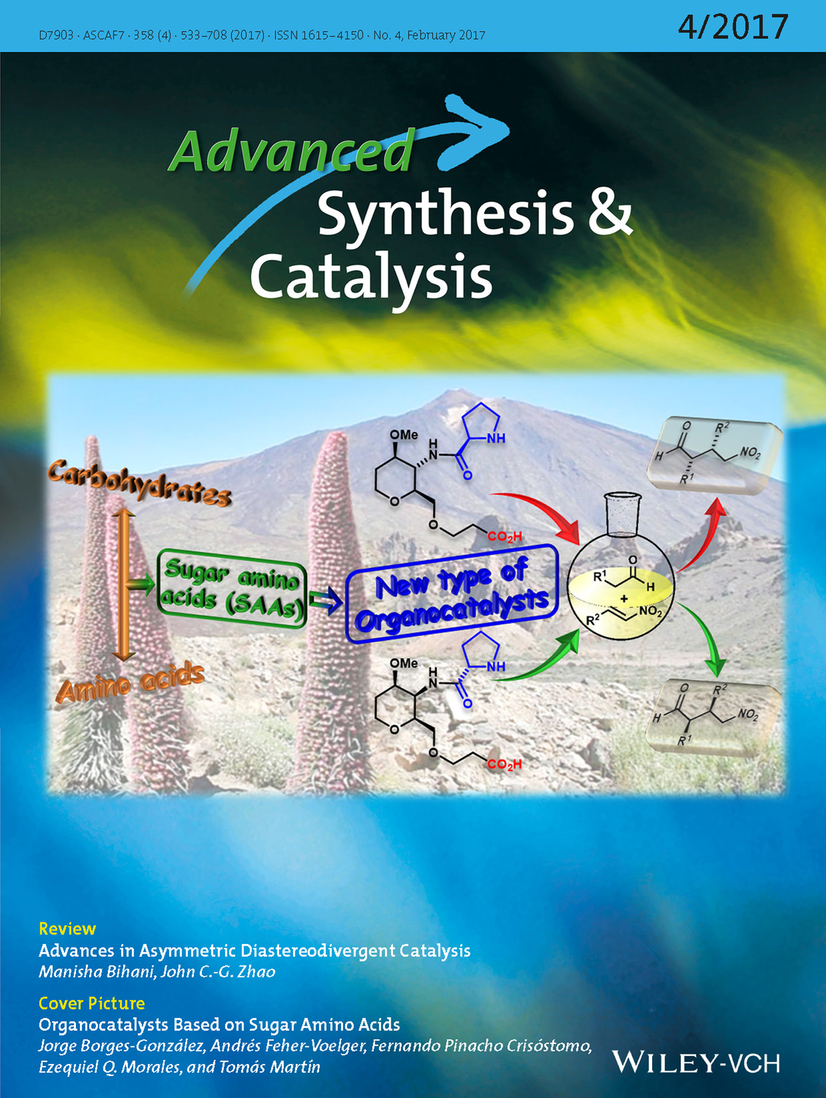
“Cut and Paste” Processes in the Search of Bioactive Products: One-Pot, Metal-free O-Radical Scission-Oxidation-Addition of C, N or P-Nucleophiles
Hypervalent iodine reagents have been applied in many metal-free, efficient synthesis of natural products and other bioactive compounds. In particular, treatment of alcohols, acetals and acids with hypervalent iodine reagents and iodine results in O-radicals that can undergo a β-scission reaction. Under these oxidative conditions, derivatives of amino acids, peptides or carbohydrates are converted into cationic intermediates, which can subsequently undergo inter- or intramolecular addition of nucleophiles. Most reported papers describe the addition of oxygen nucleophiles, but this review is focused on the addition of carbon, nitrogen and phosphorous nucleophiles. The resulting products (nucleoside and alkaloid analogs, unnatural amino acids, site-selectively modified peptides) are valuable intermediates or analogs of bioactive compounds.

Porras, Marina; Hernández, Dácil; González Martín, Concepción C.; Boto, Alicia.
In vitro activity and cell death mechanism induced by acrylonitrile derivatives against Leishmania amazonensis
Leishmaniasis produces approximately-one million of new cases annually, making it one of the most important tropical diseases. As current treatments are not fully effective and are toxic, it is necessary to develop new therapies that are more effective and less toxic, and cause a controlled cell death, with which we can avoid the immunological problems caused by necrosis. In this work 32 acrylonitriles were studied in vitro against Leishmania amazonensis. Three compounds Q20 (12.41), Q29 (11.2) and Q31 (11.56) had better selectivity than the reference compound, miltefosine (11.14) against promastigotes of these parasites, for this reason they were selected to determine their mechanism of action to know the cell death type of they produce. The results of the mechanisms of action show that these three acrylonitriles tested produce chromatin condensation, decreased mitochondrial membrane potential, altered plasma permeability and production of reactive oxygen species. All these characteristic events seem to indicate programmed cell death. Therefore, this study demonstrates the activity of acrylonitriles derivatives as possible leishmanicidal agents.

Bethencourt-Estrella, Carlos J.; Delgado-Hernández, Samuel; López-Arencibia, Atteneri; San Nicolás-Hernández, Desirée; Tejedor, David; García-Tellado, Fernando; Lorenzo-Morales, Jacob; Piñero, José E.
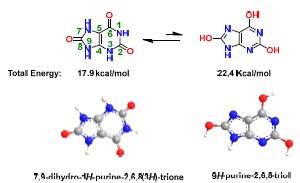
Nitration of Flavonoids and Tocopherols as Potential Modulators of Nitrosative Stress—A Study Based on Their Conformational Structures and Energy Content
Vitamin E and dietary flavonoids are natural substances with antioxidant and anti-inflammatory activities, showing little or no side effects. Fruit and vegetable diets based on flavonoids and vitamin E provide a benefit to hypertensive subjects by regulating blood pressure. However, the exact mechanism of their anti-inflammatory properties has not been chemically explained. It has been proposed that their anti-oxidant and anti-inflammatory properties may be related to their ability to scavenge free radicals. We here describe the chemical considerations that flavonoids and tocopherols required to act as potential scavengers of the •NO2 radical, a key radical in the cellular oxidative process. Moreover, we provide a theoretical study of the energy content of the nitrated compounds in the different possible positions. With this analysis, it was predicted that five flavonoids from different families (quercetin (flavanol), naringenin (flavanone), luteolin (flavone), catechin (flavanol) and aurantinidin (anthocyanin)) and three tocopherols (β-, γ-, and δ-tocopherol, but not α-tocopherol) could act as potential scavengers of the harmful •NO2 radical. These results may help to explain their beneficial effect on cardiovascular health through its antioxidant role. To validate our theoretical considerations, we also examined uric acid, a well-known •NO2-scavenger. We hope this study could help to elucidate the potential scavenging activity of other dietary antioxidants.
Pérez de Lastra, José Manuel; Andrés Juan, Celia; Plou Gasca, Francisco José; Pérez-Lebeña, Eduardo.
Isobenzofuran-1(3H)-one derivatives: Amoebicidal activity and program cell death in Acanthamoeba castellanii Neff
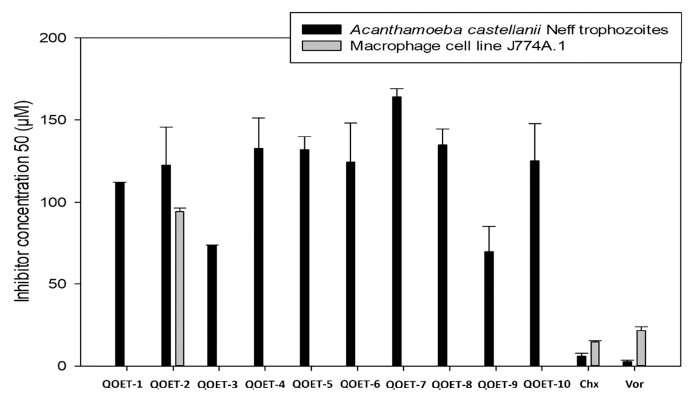
The genus Acanthamoeba is characterized by being a group of ubiquitous and free-living amoebae that inhabit a variety of environments. Generally, human infections by this parasite are associated with Acanthamoeba keratitis, especially in contact lens wearers, and with chronic but fatal granulomatous amoebic meningoencephalitis. Current treatments used for eradication of amoeba from infection sites represent a challenge for pharmacotherapy, due to the lack of effective treatment and the amoebae highly resistant to anti-amoebic drugs. In this study, we describe the results of the assessment of the IC50 of 10 isobenzofuran-1(3H)-one derivatives (QOET) against four Acanthamoeba strains. The compounds QOET-3 and QOET-9 were the selected derivatives with the lowest IC50 in A. castellanii Neff trophozoites (73.71 ± 0.25 and 69.99 ± 15.32 μM, respectively). Interestingly, analysis of the compound effects on the cell apoptosis-like features showed that both active molecules triggered programmed cell death (PCD) in A. castellanii Neff. The results obtained in this study highlights that isobenzofuranone derivatives could represent an interesting source for developing novel antiamoebic drugs.
Rodríguez-Expósito, Rubén L.; Reyes-Batlle, María; Sifaoui, Inés; Tejedor, David; García-Tellado, Fernando; Piñero, José E.; Lorenzo-Morales, Jacob.
A Fluorescent Cage for Supramolecular Sensing of 3-Nitrotyrosine in Human Blood Serum
3-Nitrotyrosine (NT) is generated by the action of peroxynitrite and other reactive nitrogen species (RNS), and as a consequence it is accumulated in inflammation-associated conditions. This is particularly relevant in kidney disease, where NT concentration in blood is considerably high. Therefore, NT is a crucial biomarker of renal damage, although it has been underestimated in clinical diagnosis due to the lack of an appropriate sensing method. Herein we report the first fluorescent supramolecular sensor for such a relevant compound: Fluorescence by rotational restriction of tetraphenylethenes (TPE) in a covalent cage is selectively quenched in human blood serum by 3-nitrotyrosine (NT) that binds to the cage with high affinity, allowing a limit of detection within the reported physiological concentrations of NT in chronic kidney disease.

Pérez-Márquez, Lidia A.; Perretti, Marcelle D.; García-Rodríguez, Dr. Raúl; Lahoz, Dr. Fernando; Carrillo Fumero, Romen.
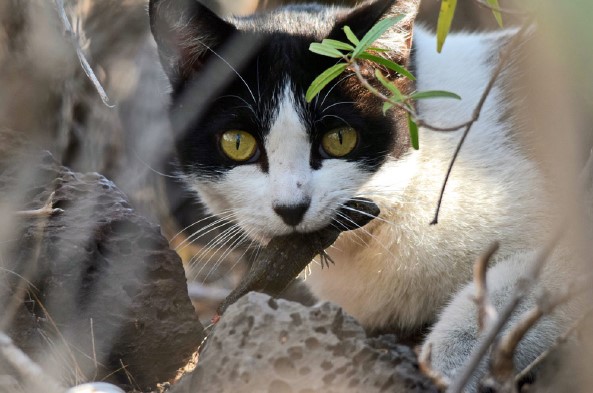
Emerging laws must not protect stray cats and their impacts
Our moral circles—that is, the entities believed as worthy of moral concern and thus deserving moral considerations—have historically expanded beyond humans to include also nonhuman beings (Crimston et al., 2018). As a result, various emerging legal instruments around the world have been granting rights to animals. However, the inclusion of animals within moral circles is subjected to important biases, with a preference for charismatic, familiar, and beautiful vertebrates (Klebl et al., 2021). We argue that legal instruments embracing such biases may jeopardize biodiversity conservation.
Carrete, Martina; Clavero, Miguel; Arrondo, Eneko; Traveset, Anna; Bernardo-Madrid, Rubén; Vilà, Montserrat; Blas, Julio; Nogales, Manuel; Delibes, Miguel; García-Rodríguez, Alberto; Hernández-Brito, Dailos; Romero-Vidal, Pedro; Tella, José L.
ML-J-DP4: An Integrated Quantum Mechanics-Machine Learning Approach for Ultrafast NMR Structural Elucidation
A new tool, ML-J-DP4, provides an efficient and accurate method for determining the most likely structure of complex molecules within minutes using standard computational resources. The workflow involves combining fast Karplus-type J calculations with NMR chemical shifts predictions at the cheapest HF/STO-3G level enhanced using machine learning (ML), all embedded in the J-DP4 formalism. Our ML provides accurate predictions, which compare favorably alongside with other ML methods.

Yi-Hsuan Tsai; Amichetti, Milagros; Zanardi, María Marta; Grimson, Rafael; Hernández Daranas, Antonio; Sarotti, Ariel M.
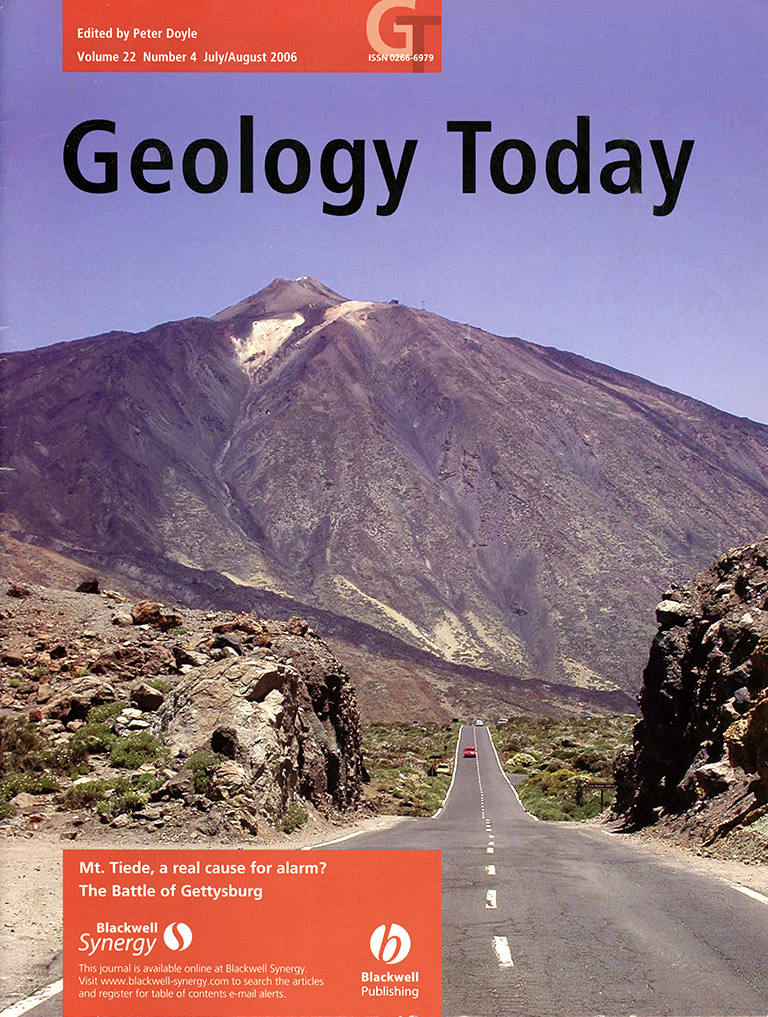
La erupción volcánica de La Palma y el papel de la Agencia Estatal de Meteorología
Durante la erupción del volcán de Cumbre Vieja, en la isla de La Palma en 2021, la Agencia Estatal de Meteorología (AEMET), en calidad de Servicio Nacional y Autoridad Meteorológica del Estado, prestó diferentes servicios de apoyo al Comité Científico y al Comité Asesor del Plan de Emergencias Volcánicas de Canarias (PEVOLCA). Parte de sus actividades abarcaron la vigilancia y predicción meteorológica, la monitorización y predicción del transporte del penacho volcánico, y la valoración del impacto de las emisiones de gases y cenizas de la erupción volcánica en la calidad del aire en la isla de La Palma y en la región de Canarias.

García, Omaira; Suárez, David; Cuevas, Emilio CSIC ORCID; Ramos, Ramón; Barreto, África; Hernández, Miguel; Quintero, Víctor; Toledano, Carlos; Sicard, Michaël; Córdoba-Jabonero, Carmen; Riz, Vicenzo; Roininen, Reijo; López, César; Vilches, Jon; Weiss, Maximilian; Carreño, Virgilio; Taquet, Noemie; Boulesteix, Thomas ; Fraile-Nuez, Eugenio ; Torres, Carlos F. ; Prats, Natalia; Alcántara, Antonio; León, Sergio; Rivas, Pedro; Álvarez, Óscar; Parra, Francisco ; de Luis, Javier; González, César; Armas, Cristina ; Romero, Pedro; de Bustos, Juan; Redondas, Alberto; Marrero, Carlos; Milford, Celia; Román, Roberto; González, Ramiro; López-Cayuela, María; Carvajal-Pérez, Clara; Chinea, Nayra; García, Rosa; Almansa, Fernando; González, Yenny; Bullón, Fernando; Poggio, Marta; Rivera, Clemente; Bayo, Concepción; Rey, Fernando
Betelvine (Piper betle L.): A comprehensive insight into its ethnopharmacology, phytochemistry, and pharmacological, biomedical and therapeutic attributes
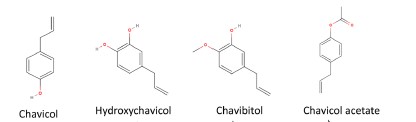
Piper betle L. (synonym: Piper betel Blanco), or betel vine, an economically and medicinally important cash crop, belongs to the family Piperaceae, often known as the green gold. The plant can be found all over the world and is cultivatedprimarily in South East Asian countries for its beautiful glossy heart-shaped leaves, which are chewed or consumed as betelquidand widely used in Chinese and Indian folk medicine, as carminative, stimulant,astringent, against parasitic worms, conjunctivitis, rheumatism, wound, etc., andis also used for religious purposes. Hydroxychavicol is the most important bioactive compound among the wide range of phytoconstituents found in essential oil and extracts. The pharmacological attributes of P. betle are antiproliferation, anticancer, neuropharmacological, analgesic, antioxidant, antiulcerogenic, hepatoprotective, antifertility, antibacterial, antifungal and many more. Immense attention has been paid to nanoformulations and their applications. The application of P. betle did not show cytotoxicity in preclinical experiments, suggesting that it could serve as a promising therapeutic candidate for different diseases. The present review comprehensively summarizes the botanical description, geographical distribution, economic value and cultivation, ethnobotanical uses, preclinical pharmacological properties with insights of toxicological, clinical efficacy, and safety of P. betle. The findings suggest that P. betle represents an orally active and safe natural agent that exhibits great therapeutic potential for managing various human medical conditions. However, further research is needed to elucidate its underlying molecular mechanisms of action, clinical aspects, structure–activity relationships, bioavailability and synergistic interactions with other drugs.
Biswas, Protha; Anand, Uttpal; Chatterjee, Suchismita (Saha); Kant, Nishi; Mishra, Tulika; Masih, Harison; Bar, Ananya; Kumar Pandey, Devendra; Kumar Jha, Niraj; Majumder, Madhumita; Das, Neela; Gadekar, Vijaykumar Shivaji; Shekhawat, Mahipal S.; Kumar, Manoj; Radha; Proćków, Jarosław; Pérez de la Lastra, José M.; Dey, Abhijit