Image
Instituto de Productos Naturales y Agrobiología
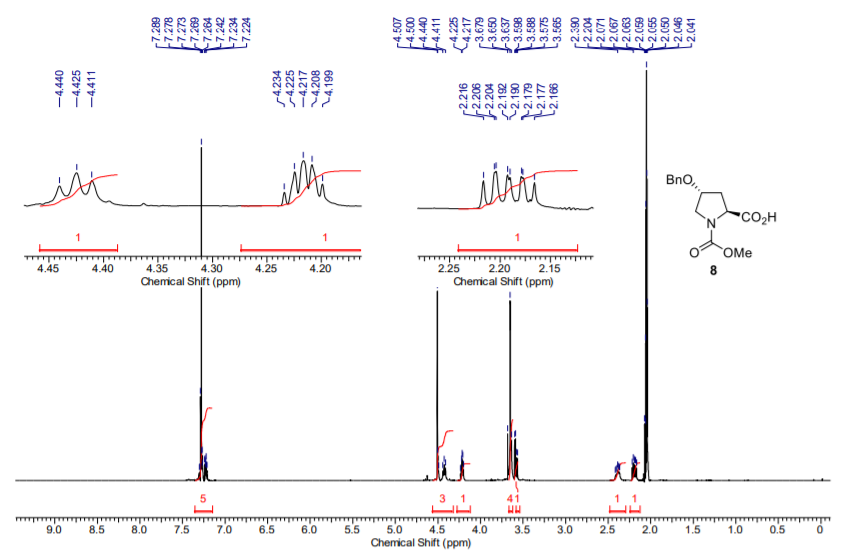
Readily available, low-cost 4R-hydroxy-l-proline (Hyp) is introduced as a “doubly customizable” unit for the generation of libraries of structurally diverse compounds. Hyp can be cleaved at two points, followed by the introduction of new functionalities. In the first cycle, the removal and replacement of the carboxylic group are carried out, followed (second cycle) by the scission of the 4,5-position and manipulation of the resulting chains. In this way, three new chains are generated and can be transformed independently to afford a diversity of products with tailored substituents, such as β-amino aldehydes, diamines, β-amino acid derivatives, including N-alkylated ones, or modified peptides. Many of these products are high-profit compounds but, in spite of their commercial value, are still scarce. Moreover, the process takes place with stereochemical control, and either pure R or S isomers can be obtained with small variations of the synthetic route.
Hernández, Dácil; Carro, Carmen; Boto, Alicia
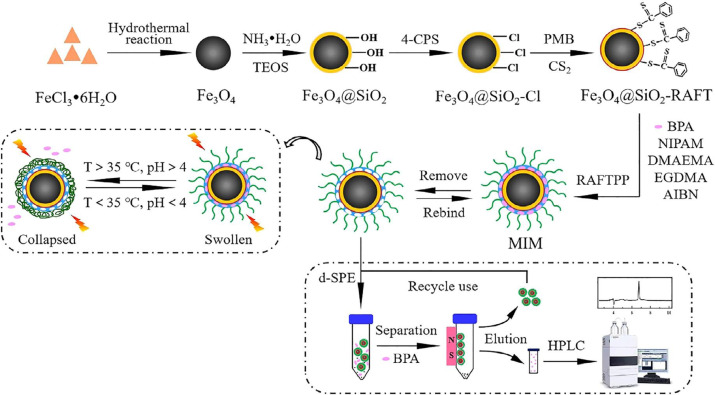
Stimuli-responsive materials, frequently designated as “smart/intelligent materials”, can modify their structure or properties by either a biological, physical, or chemical stimulus which, if properly controlled, could be used for specific applications. Such materials have been studied and exploited in several fields, like electronics, photonics, controlled drugs administration, imaging and medical diagnosis, among others, as well as in Analytical Chemistry where they have been used as chromatographic stationary phases, as part of sensors and for extraction purposes. This review article pretends to provide an overview of the most recent applications of these materials (mostly polymeric materials) in sample preparation for extraction purposes, as well as to provide a general vision of the current state-of-the-art of this field, their potential use and future applications.
González-Sálamo, Javier; Ortega-Zamora, Cecilia; Carrillo Fumero, Romen; Hernández-Borges, Javier
Five novel biscembranoids, ximaolides H–L (1–5), along with four known related compounds (6–9) were isolated from the Hainan soft coral Sarcophyton tortuosum. The structures of the new compounds were determined by extensive spectroscopic analysis, quantum chemical calculations, and/or by comparing their CD spectra with those of the known compounds. Compounds 1 and 2 are the first examples of biscembranoids bearing a 1, 35-bridged lactone moiety, 4 is the first biscembranoid comprising an uncommon oxetane ring, and 5 represents the first 36-peroxyl biscembranoid. Ximaolides I (2), K (4) and F (9) exhibited interesting anti-inflammatory activity by the inhibition of LPS-induced TNF-α protein release in RAW264.7 macrophages.
Li, Yufen; Li, Songwei; Cuadrado, Cristina; Gao, Chenglong; Wu, Qihao; Li, Xiaolu; Pang, Tao; Hernández Daranas, Antonio; Guo, Yuewei; Li, Xuwen
[EN] Results provided by a panel of experts reveal that some of the vital challenges facing Agroecology in the near future involve its contribution to Climate Action, to increasing biodiversity or to the co-creation of knowledge by researchers and farmers, as well as the application of criteria of Circular Bioeconomy to agro-food production and distribution. Other noteworthy challenges refer to the design of agroecosystems at landscape scale or the creation of agroecological local food systems enabling an upscaling of production and consumption.
[ES] Los resultados de un panel de expertos reflejan que algunos importantes desafíos que tiene la Agroecología cara al futuro próximo son su contribución a la Acción por el Clima, a la mejora de la biodiversidad o a la co-creación de conocimiento entre investigadores y campesinos, así como la aplicación de criterios de Bioeconomía Circular en la producción y distribución agroalimentarias. El diseño de agroecosistemas a escala de paisaje o la creación de sistemas alimentarios locales agroecológicos que posibiliten un salto de escala de la producción y el consumo constituyen también otros retos destacables.
Sanz Cañada, Javier; Gómez Aparicio, Lorena; Alonso-González, Pablo; Cayuela, María Luz; Gómez Calero, José Alfonso; Guzmán, Gloria I.; González de Molina, Manuel; Lavín, Paz; Llobera Serra, Franco; Martínez-Rodríguez, C.; Moreno, Aránzazu; Peña-Chocarro, Leonor; Tomé Martín, Pedro; Valladares Ros, Fernando.
Island ecosystems are particularly vulnerable to the introduction of exotic species that can have an impact on local fauna and flora. Here, the carpenter bee Xylocopa pubescens is reported in Gran Canaria (Canary Islands, Spain) for the first time. This species is native to North Africa and the Near East and shows a rapid dispersion across the city of Las Palmas de Gran Canaria, together with a single record in the southernmost tip of the island. Different hypotheses about its arrival to the island are discussed.
Ruiz, Carlos; Suárez, Daniel; Naranjo, Manuel; De la Rúa, Pilar
Six novel oxasqualenoids (polyether triterpenes) were isolated from the red alga Laurencia viridis. Laurokanols A–E (1–5) comprise an unreported tricyclic core with a [6,6]-spiroketal system. Yucatecone (6) shows a biogenetically intriguing epimerization at C14. Quantum mechanical calculations were used to corroborate their structures and to explain key steps involved in the biogenetic mechanisms proposed for the formation of oxasqualenoids.
Cen-Pacheco, Francisco; Santiago-Benítez, Adrián J.; Tsui, Ka Yi; Tantillo, Dean J.; Fernández, José J.; Hernández Daranas, Antonio
This paper explores Spanish pesticide policy with a focus on developments during the last decade. Spain is one of the greatest global consumers of conventional pesticides and leader in various related rankings among European Union countries. However, reviews of pesticide policies examining the key plans, facts, strategies and stakeholders are largely lacking. In providing an overview of Spanish responses to the European Directive 2009/128/EC on the Sustainable Use of Pesticides, this article contributes to filling this research gap. Spanish National Action Plans lack measurable quantitative objectives for reduction in the use of conventional pesticides and further implementation of Integrated Pest Management. Spanish National Action Plans also lack strategies for informing citizens about pesticide residues, and efficient means of keeping up to date with the authorisation of new active substances and delivery of pesticide use and sales data, in time and form. Moreover, there are no clear trends in conventional pesticide use reduction and sales, despite a significant reduction in the use of the more toxic active substances. Overall, this paper reveals various important shortcomings and incongruences in Spanish pesticide policy, which deserve further scholarly exploration and should be a matter of concern for public bodies.
Alonso-González, Pablo; Parga-Dans, Eva; Pérez Luzardo, Octavio.
Biological invasions are a major global threat to biodiversity and often affect ecosystem services negatively. They are particularly problematic on oceanic islands where there are many narrow-ranged endemic species, and the biota may be very susceptible to invasion. Quantifying and mapping invasion processes are important steps for management and control but are challenging with the limited resources typically available and particularly difficult to implement on oceanic islands with very steep terrain. Remote sensing may provide an excellent solution in circumstances where the invading species can be reliably detected from imagery. We here develop a method to map the distribution of the alien chestnut (Castanea sativa Mill.) on the island of La Palma (Canary Islands, Spain), using freely available satellite images. On La Palma, the chestnut invasion threatens the iconic laurel forest, which has survived since the Tertiary period in the favourable climatic conditions of mountainous islands in the trade wind zone. We detect chestnut presence by taking advantage of the distinctive phenology of this alien tree, which retains its deciduousness while the native vegetation is evergreen. Using both Landsat 8 and Sentinel-2 (parallel analyses), we obtained images in two seasons (chestnuts leafless and in-leaf, respectively) and performed image regression to detect pixels changing from leafless to in-leaf chestnuts. We then applied supervised classification using Random Forest to map the present-day occurrence of the chestnut. Finally, we performed species distribution modelling to map the habitat suitability for chestnut on La Palma, to estimate which areas are prone to further invasion. Our results indicate that chestnuts occupy 1.2% of the total area of natural ecosystems on La Palma, with a further 12–17% representing suitable habitat that is not yet occupied. This enables targeted control measures with potential to successfully manage the invasion, given the relatively long generation time of the chestnut. Our method also enables research on the spread of the species since the earliest Landsat images
Devkota, Ram Sharan; Field, Richard; Hoffman, Samuel; Walentowitz, Anna; Medina, Félix M.; Vetaas, Ole Reidar; Chiarucci, Alessandro; Weiser, Frank; Jentsch, Anke; Beierkuhnlein, Carl
Guaiane-type sesquiterpene lactones are naturally occurring compounds which have attracted attention due to their array of biological activities. In this study, chlorinated guaianolides <b>1</b>–<b>8</b>, isolated from plants of the genus <i>Centaurea</i>, were evaluated against the human leukemia cell lines HL-60, U-937, a specific U-937 cell line that overexpresses the anti-apoptotic Bcl-2 protein and the human melanoma cell line SK-MEL-1. This established the relevant structure-growth inhibition relationships. Chlorohyssopifolins A (<b>1</b>), C (<b>3</b>) and D (<b>4</b>) and linichlorin A (<b>6</b>) were the most potent compounds in terms of inducing growth inhibition in the four cell lines. IC<sub>50</sub> values were below 10 μM in all cases. Chlorohyssopifolins A (<b>1</b>) and D (<b>4</b>) and linichlorin A (<b>6</b>) were potent apoptotic inducers in human U-937 leukemia cells, as determined by fluorescent microscopy and flow cytometry, and their mechanism of action was associated with cytochrome <i>c</i> release, caspase activation and poly(ADP-ribose)polymerase cleavage. Overall this study shows that guaianolides induce cytotoxicity against human tumor cells and provides important insights into the cell death pathways that are involved.
Estévez-Sarmiento, Francisco; Saavedra, Ester; Ruiz-Estévez, Mercedes; León, Francisco; Quintana, José; Brouard, Ignacio; Estévez Francisco
The marine environment is a rich source of biologically active molecules for the treatment of human diseases, especially cancer. The adaptation to unique environmental conditions led marine organisms to evolve di erent pathways than their terrestrial counterparts, thus producing unique chemicals with a broad diversity and complexity. So far, more than 36,000 compounds have been isolated from marine micro- and macro-organisms including but not limited to fungi, bacteria, microalgae, macroalgae, sponges, corals, mollusks and tunicates, with hundreds of new marine natural products (MNPs) being discovered every year.Marine-based pharmaceuticals have started to impactmodern pharmacology and different anti-cancer drugs derived frommarine compounds have been approved for clinical use, such as: cytarabine, vidarabine, nelarabine (prodrug of ara-G), fludarabine phosphate (pro-drug of ara-A), trabectedin, eribulin mesylate, brentuximab vedotin, polatuzumab vedotin, enfortumab vedotin, belantamab mafodotin, plitidepsin, and lurbinectedin. This review focuses on the bioactive molecules derived from the marine environment with anticancer activity, discussing their families, origin, structural features and therapeutic use.
Barrera, Marilia; Spanò, Virginia; Montalbano, Alessandra; Cueto, Mercedes; Díaz Marrero, Ana R.; Deniz, Irem; Erdogan, Aysegül; Lukic Bilela, Lada; Moulin, Corentin; Taffin-de-Givenchy, Elisabeth; Spriano, Filippo; Perale, Giuseppe; Mehiri, Mohamed; Rotter, Ana; Thomas, Olivier P.; Barraja, Paola; Gaudêncio, Susana P.; Bertoni, Francesco