Image
Instituto de Productos Naturales y Agrobiología
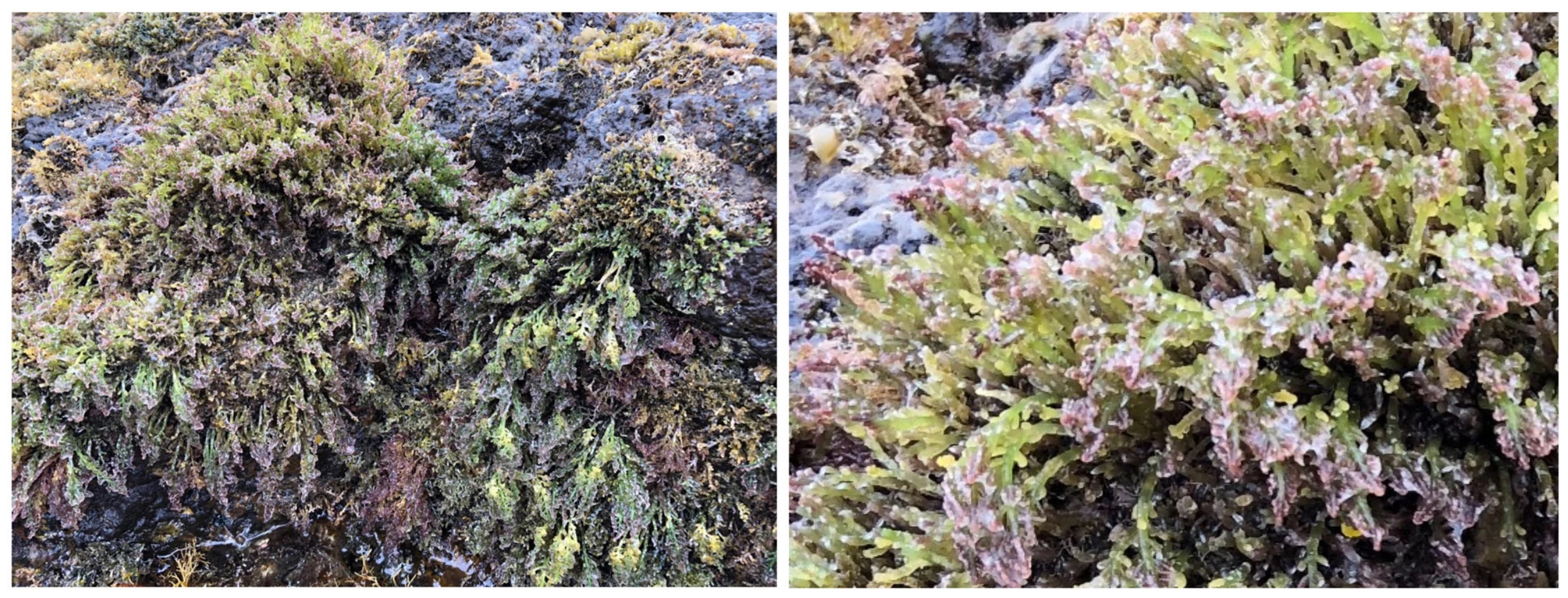
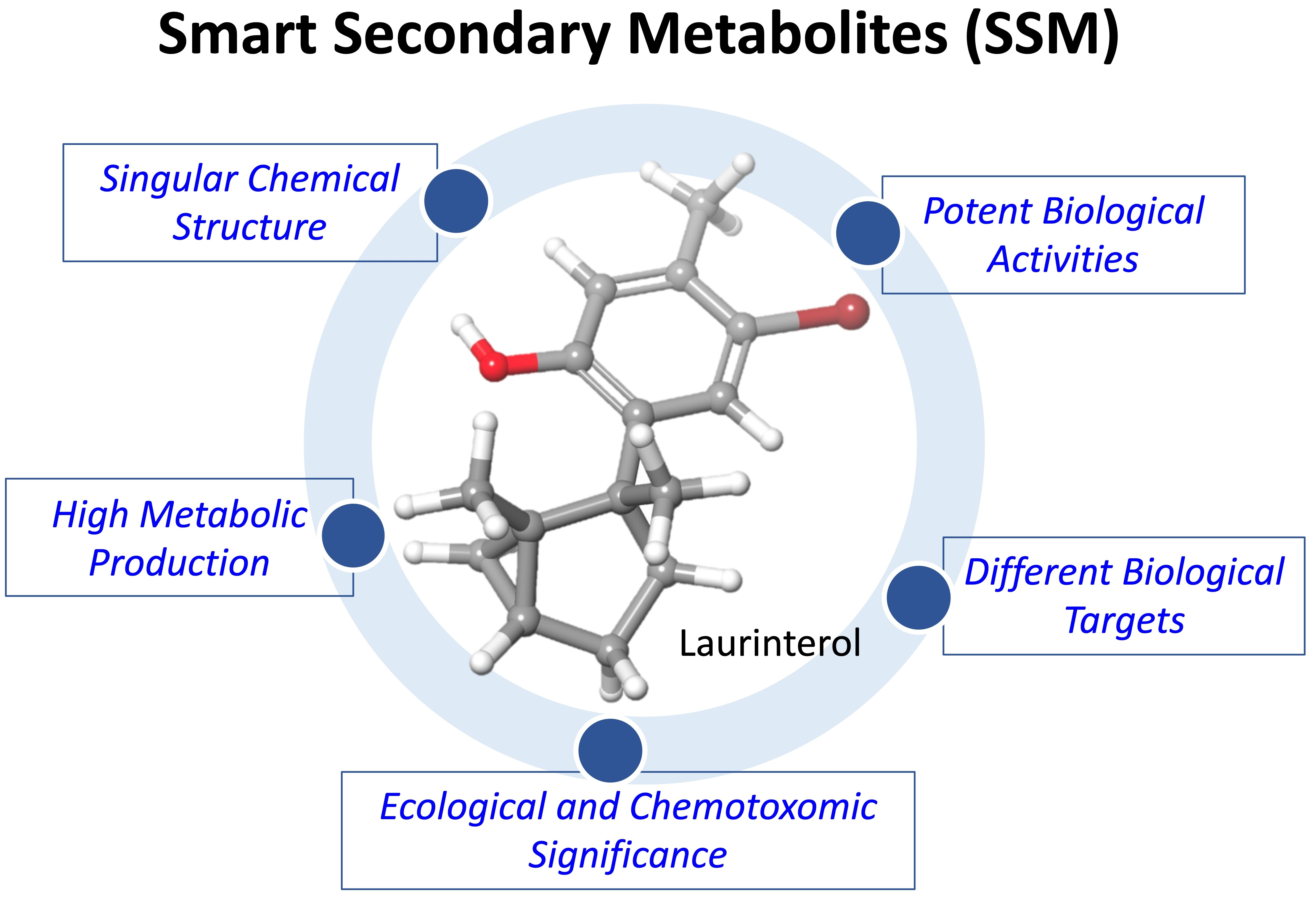
Laurinterol, a halogenated sesquiterpene produced by red algae of the genus Laurencia, is one of the most characteristic compounds within the laurane and cyclolaurane families. This review compiles and examines current knowledge on laurinterol, integrating evidence on its occurrence, biosynthesis, biological activities, and structural features. Within a functional and ecological framework, laurinterol is proposed as an archetypal Smart Secondary Metabolite (SSM), a concept that reflects the convergence of structural singularity, high abundance within its biosynthetic context, broad biological activity, multi-target interactions, and ecological or chemotaxonomic relevance. This perspective highlights its role in adaptive processes within producing organisms and associated trophic networks. Laurinterol exhibits a broad bioactivity profile, including antimicrobial, antimycobacterial, cytotoxic, antiparasitic, enzyme inhibitory, antifouling, and insecticidal or repellent effects. Structure–activity relationship (SAR) studies remain limited and are mainly developed in specific models, particularly against Naegleria fowleri. The current intellectual property landscape related to laurinterol, including patent applications, granted patents, and technological development trends, is also examined. Overall, this review positions laurinterol as a structurally distinctive and functionally relevant marine metabolite within chemical ecology and marine natural products research.
García-Davis, Sara; Díaz-Marrero, Ana Raquel; Fernández, José J.
Laurinterol, a halogenated sesquiterpene produced by red algae of the genus Laurencia, is one of the most characteristic compounds within the laurane and cyclolaurane families. This review compiles and examines current knowledge on laurinterol, integrating evidence on its occurrence, biosynthesis, biological activities, and structural features. Within a functional and ecological framework, laurinterol is proposed as an archetypal Smart Secondary Metabolite (SSM), a concept that reflects the convergence of structural singularity, high abundance within its biosynthetic context, broad biological activity, multi-target interactions, and ecological or chemotaxonomic relevance. This perspective highlights its role in adaptive processes within producing organisms and associated trophic networks. Laurinterol exhibits a broad bioactivity profile, including antimicrobial, antimycobacterial, cytotoxic, antiparasitic, enzyme inhibitory, antifouling, and insecticidal or repellent effects. Structure–activity relationship (SAR) studies remain limited and are mainly developed in specific models, particularly against Naegleria fowleri. The current intellectual property landscape related to laurinterol, including patent applications, granted patents, and technological development trends, is also examined. Overall, this review positions laurinterol as a structurally distinctive and functionally relevant marine metabolite within chemical ecology and marine natural products research.
García-Davis, Sara; Díaz-Marrero, Ana R.; Fernández, José J.
Nuclear Factor Erythroid 2-Related Factor 2 (NRF2) and Nuclear Factor kappa B (NF-κB) are central regulators of redox balance and inflammation, and in healthy tissues, their activities are tightly coordinated. Classical models emphasise an antagonistic relationship in which NRF2-driven antioxidant programmes limit the oxidative cues that sustain NF-κB signalling, while inflammatory cascades can restrain cytoprotective responses when robust host defence is required. Increasing evidence from experimental systems and human tumours indicates that this antagonism is frequently relaxed in cancer. Chronic exposure to reactive oxygen species (ROS), cytokines, hypoxia, and mechanical distortion reconfigures the shared regulatory module formed by these transcription factors, allowing stable co-activation rather than mutual exclusion. In many malignancies, NRF2 and NF-κB become simultaneously active, generating hybrid transcriptional states that integrate antioxidant, inflammatory, metabolic, and survival programmes within the same tumour ecosystem.
Pérez de la Lastra, José Manuel; Curieses Andrés, Celia María; Bustamante Munguira, Elena; Andrés Juan, Celia; Pérez-Lebeña, Eduardo.
In recent years, the pufferfish Lagocephalus lagocephalus has been recorded with unusual frequency in coastal areas of the Canary Islands. The most notable episodes occurred in March and November 2017, when numerous shoals were observed along the coasts of the Western Canary Islands. A toxicological study of these episodes was carried out, analyzing liver, kidney, gonads, skin, and muscle of a representative population. In all toxic samples (33.3% and 41.7% of specimens in March and November 2017, respectively), only the liver extract showed toxicities, using a mouse biological assay (MBA). The toxicological profile was determined by UHPLC-MS-MS, identifying saxitoxin (STX) and tetrodotoxin (TTX) congeners. This analytical methodology was optimized to determine 26 marine toxins. Thus, in the March 2017 episode, the toxicological profile was characterized by the co-occurrence of tetrodotoxins (TTX and 4-epiTTX) and paralytic shellfish toxin (PST) analogues (dcSTX, dcneoSTX, and doSTX); however, STX and neoSTX emerged as the dominant toxins in specimens collected during the November 2017 episode. The results show that L. lagocephalus in the Canary Islands presents a variable and dynamic toxicological profile, strongly influenced by environmental factors. These findings highlight the need for continued monitoring and for analytical approaches capable of capturing this complexity and assessing potential risks to public health.
Nocchi, Nathália; Santana-Mayor, Álvaro; Conde-Díaz, Adrián; Hernández-Lopez, Víctor; Rodríguez Hernández, Adriana; Brito, Alberto; Díaz-Marrero, Ana Raquel; Fernández, José J.
In recent years, the pufferfish Lagocephalus lagocephalus has been recorded with unusual frequency in coastal areas of the Canary Islands. The most notable episodes occurred in March and November 2017, when numerous shoals were observed along the coasts of the Western Canary Islands. A toxicological study of these episodes was carried out, analyzing liver, kidney, gonads, skin, and muscle of a representative population. In all toxic samples (33.3% and 41.7% of specimens in March and November 2017, respectively), only the liver extract showed toxicities, using a mouse biological assay (MBA). The toxicological profile was determined by UHPLC-MS-MS, identifying saxitoxin (STX) and tetrodotoxin (TTX) congeners. This analytical methodology was optimized to determine 26 marine toxins. Thus, in the March 2017 episode, the toxicological profile was characterized by the co-occurrence of tetrodotoxins (TTX and 4-epiTTX) and paralytic shellfish toxin (PST) analogues (dcSTX, dcneoSTX, and doSTX); however, STX and neoSTX emerged as the dominant toxins in specimens collected during the November 2017 episode. The results show that L. lagocephalus in the Canary Islands presents a variable and dynamic toxicological profile, strongly influenced by environmental factors. These findings highlight the need for continued monitoring and for analytical approaches capable of capturing this complexity and assessing potential risks to public health.
Nocchi, Nathália; Santana-Mayor, Álvaro; Conde-Díaz, Adrián; Hernández-Lopez, Víctor; Rodríguez Hernández, Adriana; Brito, Alberto; Díaz-Marrero, Ana Raquel CSIC ORCID ; Fernández, José J.
Skytanthus acutus Meyen (Apocynaceae), commonly known as ‘Cuerno de cabra,’ is an endemic species from northern Chile that grows in dune and desert habitats of the Atacama region. This study evaluated the antiproliferative activity of an ethanolic extract from its aerial parts against six human tumour cell lines (A549, HBL-100, HeLa, SW1573, T-47D, and WiDr), yielding GI50 values of 16–28 µg/mL. Bioassay-guided fractionation resulted in the isolation of three compounds: the pentacyclic triterpenoids betulinic acid (BA) and oleanolic acid (OA), reported for the first time in this species, and the monoterpene alkaloid β-skytanthine N-oxide (SN), whose biological activity is described here for the first time. OA showed greater potency (GI50: 3.6–7.2 µM) than BA (GI50: 14–84 µM) and induced cytostatic and apoptotic effects in HeLa cells, highlighting S. acutus as a promising source of anticancer triterpenoids.
Dioni, Arrieche; Pardo-Baeza, Javier; Fernández, José J.; Díaz-Marrero, Ana R.; González-Bakker, Aday; Puerta, Adrián; Padrón, José M.; Taborga, Lautaro; Carrasco, Héctor.
Polyphenols act in humans through authentic metabolites, including regio-isomeric glucuronides/sulphates, O-methylated forms, and microbiota products (urolithins, γ-valerolactones, equol), that reach targets by spatiotemporally gated exposure. Vectorial transport (MRP2/BCRP/P-gp), enterohepatic cycling, and β-glucuronidase hubs create early, surface-proximal microbursts of aglycone/catechol, whereas microbiota metabolites arrive systemically 6–24 h later. Signalling emerges from a continuum of weak noncovalent modulation, conditionally gated electrophile/redox relays (catechol → o-quinone, reversible Michael adduction plus signalling-range H2O2), and PTM cascades (phosphorylation → acylation → proteostasis) that reprogram NRF2/Keap1, NF-κB/IKK, AMPK/MAPK/PI3K-Akt, SIRT1/HDACs, PPARγ, AhR, and TFEB according to where and when metabolites appear. We provide methods and standards to dose isomer-resolved metabolites at physiological free concentrations (nM-low µM) in transport-competent systems, with PK-informed sampling across seconds–minutes, 15/60/240 min, and 6–24 h, and we outline a research agenda (reference panels, spatial exposure atlases, metabotype-stratified trials, safety windows). Framed this way, polyphenols shift from vague “antioxidants” to programmable dietary signals that enable precision nutrition targeting transcription-factor and proteostasis programmes in vivo.
Pérez de la Lastra, José Manuel; Curieses Andrés, Celia María; Bustamante Munguira, Elena; Andrés Juan, Celia; Pérez Lebeña, Eduardo.
Dehydrothyrsiferol (DT), a brominated oxasqualenoid from the red alga Laurencia viridis, represents a compelling example of this framework. This review establishes DT as a model Smart Secondary Metabolite based on the convergence of a unique molecular architecture of rigid stereogroups connected by flexible bonds; a high metabolic yield (0.42% w/w of crude extract); potent selective bioactivity against kinetoplastids and drug-resistant tumors; multi-target modulation of protein phosphatase 2A (PP2A) and cell-surface integrins; and distinctive chemotaxonomic relevance within Macaronesian communities. Its biosynthesis proceeds through stereocontrolled epoxide-opening cascades, generating an evolutionarily refined scaffold. Ecologically, DT operates as a multifunctional shield, providing antifouling protection and deterring herbivory. Pharmacologically, it acts as a selective signaling modulator, triggering integrin-mediated cell death (IMD) in resistant cancer cells and inducing mitochondrial collapse in protozoa. In vivo studies in murine models of cutaneous leishmaniasis have demonstrated an 87% reduction in lesion size, reinforcing its promise as a lead structure.
Cen-Pacheco, Francisco; Díaz-Marrero, Ana Raquel; Fernández, José J.
Silymarin (Silybum marianum (L.) Gaertn. extract) is a widely used botanical for liver disease, yet clinical results remain inconsistent. Most mechanistic work uses supraphysiological aglycones, whereas humans are exposed predominantly to phase II conjugates that are strongly protein-bound and routed by transporters toward bile and the intestinal mucosa. We reframe silymarin activity through a spatial pharmacology lens, proposing three post-intake windows: early (0–2 h) conjugate-dominant exposure with localised β-glucuronidase-mediated reactivation; intermediate (2–8 h) enterohepatic recirculation pulses; and late (8–48 h) microbial catabolite contributions. Each window engages distinct signalling modules—Keap1/NRF2, NF-κB, and AMPK-mTOR-TFEB—via transient redox events (quinone cycling, micro-H2O2 relays) and proteostatic remodelling (autophagy/mitophagy). We synthesise human pharmacokinetic and clinical evidence—with emphasis on MASLD and alcohol-associated liver disease—and show how formulation, meal timing, and microbiome metabotype determine which windows are engaged. Finally, we propose minimum reporting standards and falsifiable hypotheses to reduce between-study heterogeneity and enable precision use of silymarin.
Pérez de la Lastra, José Manuel; Curieses Andrés, Celia María; Bustamante Munguira, Elena; Andrés Juan, Celia; Pérez-Lebeña, Eduardo.
Monascus food supplements are marketed because of the presence of hypocholesterolemic compounds and some species of the genus Monascus are characterized by their ability to biosynthesize industrially important azaphilone-type dyes. Although some colored compounds can photosensitize the singlet oxygen (1O2) generation, which is associated with chronodegenerative diseases, information on the photosensitizing capacity of Monascus dyes and Monascus based-products is lacking. Therefore, in this study, the photosensitizing capacity to generate 1O2 of Monascus purpureus extracts together with the main compound isolated, monascin, was evaluated through the photo-oxidation of ergosterol method (CFL-T4-GE 20W, λ > 380 nm, 19625 ± 129 lux, 2 h). In addition, the photosensitizing capacity of a Monascus food supplements was also evaluated. Subsequently, a thermodynamic theoretical analysis of the six most frequently reported azaphilones from M. purpureus was performed utilizing the time-dependent density functional theory (TD-DFT) to compare Gibbs free energies in relation to their potential as photosensitizers. Thus, the photo-oxidation of ergosterol using M. purpureus extracts, monascin and the Monascus food supplement extract as photosensitizers, combined with the computational study of the azaphilones from this fungal species, demonstrated that the metabolites of this species can transfer energy to molecular oxygen (3O2) through photosensitization processes to generate 1O2. Therefore, this study opens the door to further in vitro and in vivo research on 1O2 generation by Monascus pigments to assess the potential health risks associated with frequent use of Monascus food supplements and, if necessary, to introduce appropriate regulatory measures for the marketing of Monascus food supplements based on their ability to generate 1O2.
Manzano, Karmen; Medina, Manuel; Lagunes, Irene; Díaz-Marrero, Ana Raquel; Fernández, José J.; Trigos, Ángel.